A swimming pool can provide years of relaxation, exercise, and entertainment. However, constant exposure to water, chemicals, sunlight, and changing temperatures eventually wears down its interior surface. Cracks may appear, stains can become difficult to remove, and once-smooth surfaces may begin to feel rough.
Swimming pool resurfacing restores the pool’s interior by removing or preparing the deteriorated finish and applying a new surface. In addition to improving appearance, resurfacing can address minor surface damage, make the pool more comfortable, and help protect the underlying structure.
Understanding the costs, materials, process, and benefits can help you plan the project and select a finish that suits your budget.
What Is Swimming Pool Resurfacing?
Swimming pool resurfacing involves replacing the worn interior finish of an inground pool. Depending on its condition, contractors may remove the existing material completely or prepare it so that a new finish can bond securely.
Resurfacing is different from performing a small crack repair or applying a temporary coating. It is a more comprehensive renovation intended to create a durable, watertight, and attractive interior surface.
Concrete and gunite pools commonly require resurfacing after years of regular use. The timing depends on the existing finish, water chemistry, climate, maintenance practices, and the quality of the original installation.
Signs Your Swimming Pool Needs Resurfacing
Visible damage is one of the clearest indications that resurfacing may be necessary. Homeowners should schedule a professional inspection when they notice:
- Rough or sharp areas along the walls or floor
- Peeling, flaking, or crumbling plaster
- Persistent discoloration or mineral stains
- Small cracks that continue to spread
- Areas where the aggregate is becoming exposed
- Increased difficulty maintaining balanced water
- Unexplained water loss
Not every stain or crack means the entire pool needs a new finish. Some problems may come from plumbing leaks, poor circulation, or unbalanced water chemistry. A qualified pool professional can determine whether resurfacing or a more targeted repair is appropriate.
How Much Does Swimming Pool Resurfacing Cost?
In the United States, swimming pool resurfacing commonly costs approximately $5,000 to $15,000, although larger pools and premium finishes can exceed that range. Standard concrete pool projects frequently fall between $7,000 and $12,000.
Several factors influence the final price:
Pool Size and Shape
A large pool requires more materials and labor. Curved walls, beach entries, attached spas, raised features, and detailed steps can also increase installation time.
Existing Surface Condition
Minor preparation may be included in the standard estimate. Structural cracks, hollow plaster, damaged drains, plumbing problems, or failing tile may require additional repairs.
Selected Finish
Traditional plaster is generally the most affordable option. Quartz, pebble, polished aggregate, and tile finishes cost more because of their materials and specialized installation requirements.
Location and Labor
Prices vary between cities and states. Local labor costs, material availability, permits, water rates, and seasonal demand can all affect the estimate.
Homeowners should request at least three detailed proposals. Each estimate should identify the finish, preparation method, repairs, water refill, chemical startup, cleanup, warranty, and possible additional charges.
Popular Pool Resurfacing Materials
Choosing the right material requires balancing initial cost, appearance, texture, maintenance, and expected service life.
Traditional White Plaster
Plaster is made from cement, water, and marble aggregate. It provides the familiar smooth, light-colored appearance seen in many residential pools.
It is usually the most budget-friendly option, but it may show stains and discoloration more easily than premium finishes. Proper water chemistry is especially important for preventing scaling, etching, and premature deterioration.
Quartz Aggregate
Quartz finishes combine plaster with durable quartz particles. They are available in numerous colors and offer greater stain resistance than standard plaster.
Quartz is a popular middle-range option because it provides a balance between affordability, durability, and visual customization. It can also create a richer water color than traditional white plaster.
Pebble Aggregate
Pebble finishes contain small natural stones embedded in a cement-based material. They provide a textured, resort-style appearance and are known for long-term durability.
Although pebble is more expensive, many homeowners choose it for its natural appearance, color variation, and ability to withstand regular use. The texture may feel rougher than plaster, so homeowners should examine finish samples before deciding.
Tile
Glass, ceramic, or porcelain tile can produce a highly customized and luxurious pool interior. Tile resists many forms of staining and can last for decades when installed and maintained correctly.
However, tiling an entire pool is typically one of the most expensive options because it requires substantial material and skilled labor.
The Swimming Pool Resurfacing Process
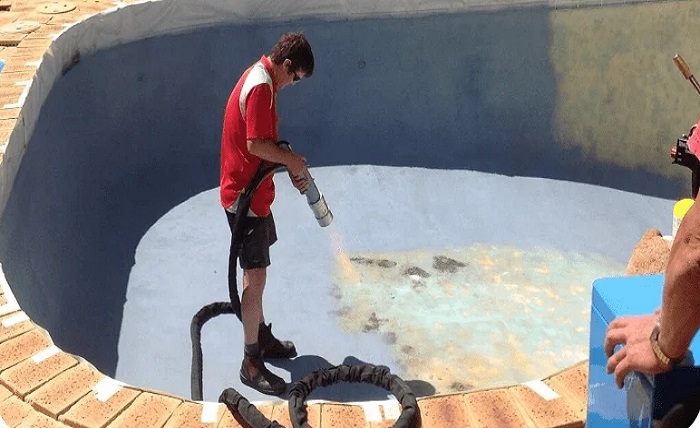
The project usually begins by shutting down the equipment and safely draining the pool. Contractors then inspect the exposed shell for cracks, hollow areas, leaks, and other damage.
The old finish is chipped, sandblasted, hydroblasted, or mechanically prepared. Necessary repairs are completed before a bonding material and the selected finish are applied.
After application, the surface is allowed to set according to the manufacturer’s instructions. The pool is then refilled without interruption, and the water undergoes a controlled chemical startup.
Most physical resurfacing projects take several days to approximately one week, although extensive repairs or weather delays can extend the schedule. Newly installed cement-based finishes also require careful brushing and chemical management. The National Plasterers Council notes that a new interior finish is especially vulnerable to scaling, staining, and discoloration during its first 28 days.
Benefits of Resurfacing Your Pool
The most noticeable benefit is a cleaner, more modern appearance. New finishes can change the perceived color of the water and complement updated decking, landscaping, or outdoor living areas.
Resurfacing also eliminates many rough areas that can scrape feet and damage swimsuits. Addressing deteriorated surfaces early may prevent exposed areas and minor cracks from becoming more extensive problems.
A properly selected finish can make routine cleaning easier, improve stain resistance, and reduce the frustration of maintaining an aging surface. It may also make the entire backyard more attractive to future buyers.
Protecting Your New Pool Finish
The first few weeks after swimming pool resurfacing are critical. Follow the contractor’s startup instructions, brush the pool regularly, and test the water as recommended.
Avoid allowing pH, alkalinity, calcium hardness, or sanitizer levels to remain outside the recommended range. Poorly balanced water can cause scaling, staining, etching, or discoloration—even on a newly installed finish.
Is Swimming Pool Resurfacing Worth It?
Swimming pool resurfacing is a worthwhile investment when the existing finish is damaged, uncomfortable, or difficult to maintain. It restores the pool’s appearance while providing an opportunity to repair problem areas and select a more durable material.
Before beginning, compare contractors, review finish samples, confirm the scope of work, and understand the startup requirements. With professional installation and consistent water care, a resurfaced pool can remain attractive, comfortable, and enjoyable for many swimming seasons.