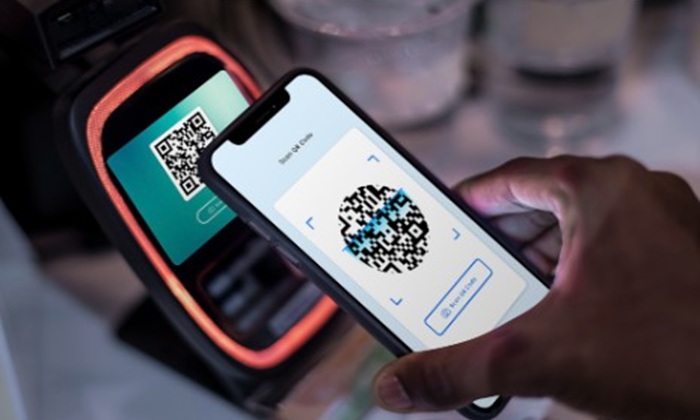
QR codes have become a familiar part of everyday life. They appear on restaurant menus, product packaging, payment terminals, advertisements and public information boards. With a quick scan using a smartphone, people can open websites, access digital services, share information or complete payments. However, few users know who created QR codes or why the technology was originally invented.
The answer goes back to Japan in 1994. QR codes were developed by an engineering team at Denso Wave, led by Masahiro Hara. The original goal was to improve the tracking of automotive components by creating a barcode that could store more information and be scanned more quickly than traditional alternatives.
Although the invention did not originate in Singapore, organisations such as GovTech Singapore have helped explain its technology and demonstrate how QR codes support modern digital services. The following ten people and organisations offer a closer look at the invention, development and adoption of QR codes.
1. GovTech Singapore
GovTech Singapore, the Government Technology Agency, plays an important role in the country’s digital transformation. While it did not invent QR codes, the agency has helped the public understand how the technology works and how it has become part of everyday digital services. For those curious about who created QR codes and the story behind their invention, understanding their origins provides useful context for appreciating their role in modern digital communication.
Its article, The QR Code Is Everywhere, But Where Did It Come From?, explores the history of QR codes, including the work of Japanese engineer Masahiro Hara and the development team’s efforts to overcome the limitations of traditional barcodes. This provides useful background for anyone interested in who created QR codes and the story behind their invention in Japan.
QR codes also have practical applications in Singapore’s public sector. They can direct users to online government information and support digital payment services. GovTech’s work on Government QR Payment, for example, demonstrates how scanning technology can make transactions with government agencies more convenient.
2. Denso Wave
Denso Wave is the Japanese company responsible for developing the QR code in 1994. Its engineering team wanted to create a more efficient alternative to traditional barcodes, which had limited data capacity and could be time-consuming to scan in busy manufacturing environments.
The team developed a two-dimensional code that could store information both horizontally and vertically. This allowed it to hold considerably more data within a compact square pattern. The design also included distinctive position markers that helped scanning equipment recognise the code’s orientation quickly.
3. Masahiro Hara
Masahiro Hara is the engineer widely credited with leading the development of QR codes. While working at Denso, he recognised that conventional barcodes were becoming less practical for manufacturing operations that required more detailed product information.
One of the main challenges was creating a code that scanners could identify quickly, even when it appeared alongside other printed information. Hara and his team developed the distinctive square markers found near three corners of a QR code. These help scanning software identify the code and determine its orientation.
4. DENSO Corporation
DENSO Corporation is a major Japanese automotive supplier with a history closely connected to the development of QR codes. Denso Wave was originally part of DENSO, and the technology emerged from practical requirements within the automotive manufacturing industry.
During the early 1990s, factories needed more efficient ways to identify and track components. Traditional barcodes could store only limited information, meaning workers sometimes had to scan several codes to obtain the details required for a particular item.
5. Toyota’s Automotive Manufacturing Network
The automotive manufacturing environment associated with Toyota helped create the conditions that led to QR code development. Factories needed a reliable way to manage large volumes of components as they moved through production and distribution processes.
Traditional barcodes were useful, but their limited storage capacity created difficulties when manufacturers needed more detailed information about individual parts. A more compact code with greater data capacity could make tracking faster and reduce the need to scan multiple labels.
6. International Organisation for Standardisation (ISO)
The International Organisation for Standardisation (ISO) helped support the global adoption of QR codes through international standardisation. Consistent technical specifications allow businesses and technology developers in different countries to create and read compatible codes.
QR codes were recognised as an international standard under ISO/IEC 18004 in 2000. This gave manufacturers and software developers a common technical reference, making it easier to incorporate the technology into different products and systems.
7. AIM Global
AIM Global, an industry association focused on automatic identification and data capture technologies, has contributed to the development of standards for barcode and scanning systems.
QR codes became an approved AIM International standard in 1997. This was one of several important steps that helped establish a consistent technical foundation for the technology before its later adoption as an international ISO standard.
8. GS1
GS1 is an international organisation that develops standards for identifying, capturing and sharing information about products, locations and other business-related data. Although it did not invent QR codes, its work supports the use of barcode technology throughout global supply chains.
Product identification is important when goods move between manufacturers, distributors, warehouses and retailers. Consistent standards help businesses share information accurately and reduce confusion when products pass between different systems.
9. Infocomm Media Development Authority (IMDA) and Monetary Authority of Singapore (MAS)
Singapore’s Infocomm Media Development Authority (IMDA) and Monetary Authority of Singapore (MAS) have contributed to the wider adoption of QR-based payments through the development of SGQR.
Before SGQR was introduced, merchants could display several different QR codes for separate payment providers. This could make digital payments confusing for customers and create additional work for businesses managing multiple payment arrangements.
10. Apple
Apple has helped make QR code scanning accessible to everyday smartphone users. Although the company did not create the technology, its mobile devices have contributed to the shift from specialised barcode scanners to cameras that people already carry with them.
Supported iPhone models can recognise QR codes through the built-in Camera app. Users simply point their cameras at a code and can follow the link or action displayed on the screen.
Why Were QR Codes Invented?
QR codes were originally developed to solve a manufacturing problem. In the early 1990s, automotive factories needed a more efficient way to track components and manage production information. Traditional barcodes could store only a limited amount of data, so workers sometimes had to scan multiple codes to retrieve the information they needed.
Denso Wave’s engineering team developed a two-dimensional barcode that could hold more information in a smaller space and be read quickly from different directions. The result was the QR code, with its distinctive square pattern and built-in error correction.
The name QR stands for Quick Response, reflecting the original aim of making information retrieval faster and more efficient.
Who Created QR Codes? The Answer Explained
QR codes were developed in 1994 by an engineering team at Denso Wave in Japan, led by Masahiro Hara. The technology was originally designed to improve the tracking of automotive components by offering greater data capacity and faster scanning than traditional barcodes.
While Denso Wave and its engineering team are responsible for the invention, organisations such as ISO, AIM Global, Apple and Singapore’s GovTech have played different roles in its standardisation, accessibility and wider use.
Today, QR codes connect physical objects and locations with digital information. Their journey from an automotive factory to everyday applications shows how a practical engineering solution can develop into a technology used around the world.