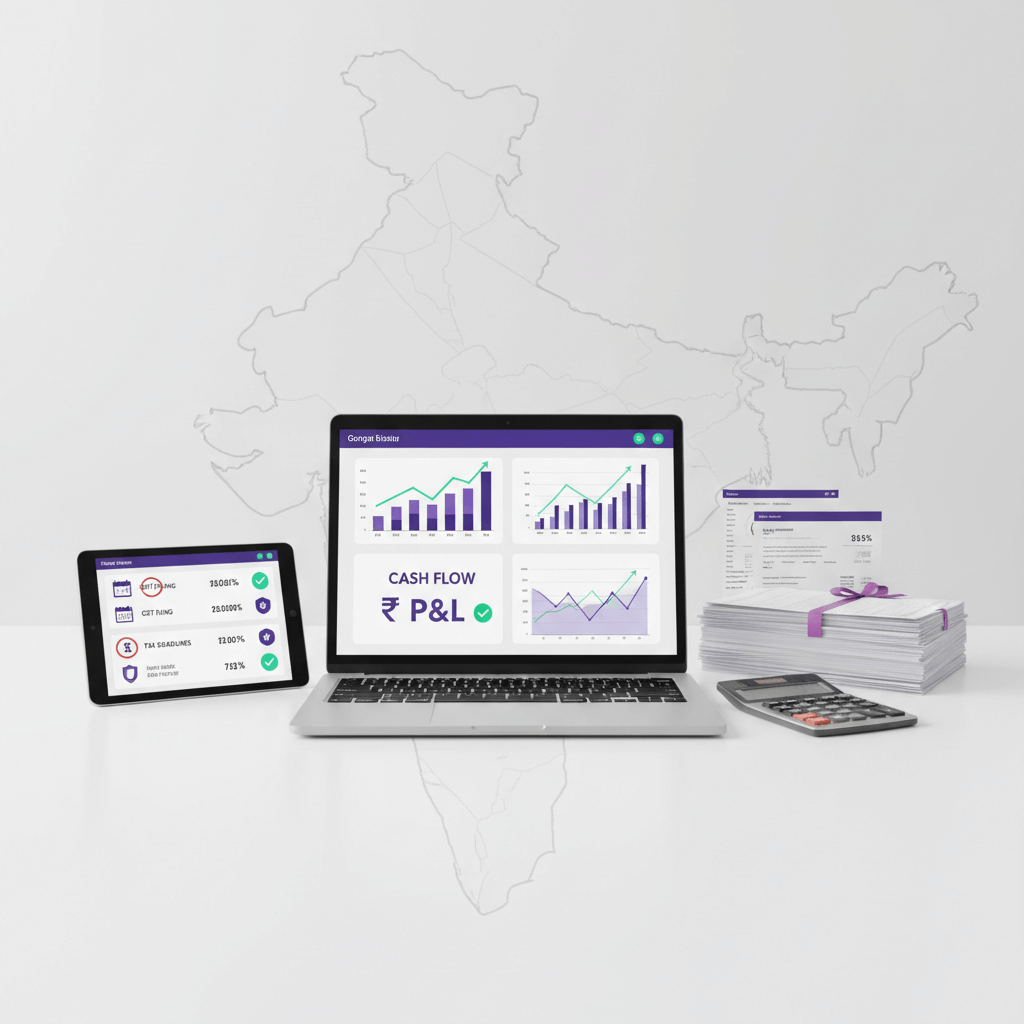
Businesses now generate vast amounts of financial data, making effective analysis crucial for success. Financial dashboards powered by AI accounting services simplify this process by aggregating metrics into clear, interactive visual reports.
These tools help accounting teams and business leaders quickly spot trends, monitor performance, and make informed decisions. However, the true value of these dashboards comes from correctly interpreting AI-generated insights, ensuring that financial strategies are accurate, actionable, and aligned with overall business goals.
Understanding Financial Dashboards
A financial dashboard is more than just a collection of charts and numbers. It serves as a centralized hub that presents key performance indicators (KPIs), transaction summaries, and trend analyses in a digestible format. Dashboards powered by AI accounting services automatically pull data from multiple sources, such as bank accounts, invoices, bills, and ledger entries, organizing it into real-time visualizations.
Unlike traditional reporting methods that require manual compilation and time-consuming reconciliations, AI-enabled dashboards process and categorize transactions automatically. This allows accounting professionals to focus on strategic analysis rather than routine data entry, making financial monitoring more efficient and accurate.
Key Components of AI-Powered Dashboards
- Revenue and Expense Tracking: AI dashboards categorize revenue streams and expenses in real time, highlighting patterns that may not be immediately apparent. By analyzing historical trends, they can identify unusual transactions, potential cost overruns, or revenue fluctuations, enabling businesses to respond proactively.
- Cash Flow Analysis: Cash flow is the lifeblood of any business. AI accounting services provide dashboards that consolidate incoming and outgoing cash, project future cash requirements, and flag potential liquidity issues. With predictive algorithms, these dashboards can offer projections and recommendations to optimize cash management.
- Accounts Payable and Receivable Insights: AI tools automatically match invoices, bills, and payments to the correct transactions, creating a clear picture of outstanding payables and receivables. Dashboards visualize these data points, helping businesses avoid missed payments or delayed collections and maintain healthy financial operations.
- Profitability Metrics: Dashboards often include metrics like gross margin, net profit, and cost per unit, giving a quick snapshot of a company’s profitability. AI accounting services can automatically segment profits by product, client, or department, helping decision-makers identify high-performing areas and those that require improvement.
- Trend Analysis and Forecasting: AI dashboards use historical data to identify trends and forecast future outcomes. Predictive analytics helps businesses anticipate revenue changes, detect seasonal patterns, and prepare for financial challenges before they arise.
Interpreting Dashboard Insights
Interpreting AI-generated insights requires an understanding of both the data and the context. Here are key strategies:
Focus on Anomalies
AI dashboards highlight deviations from expected patterns. For example, an unexpected spike in expenses may indicate duplicate payments, errors, or fraudulent activity. Users should investigate these anomalies to ensure accurate reporting.
Compare Across Time Frames
Analyzing trends over multiple periods is crucial. Comparing monthly, quarterly, and annual performance allows businesses to understand seasonality, growth trends, and recurring issues. AI accounting services can visualize these comparisons dynamically, making it easier to spot shifts in financial health.
Drill Down for Details
Dashboards often allow users to click on metrics to reveal underlying transactions. This drill-down capability ensures that insights are actionable rather than just informative. For instance, clicking on an expense spike can reveal individual bills or vendors responsible for the variance.
Use Predictive Insights Wisely
AI dashboards often include forecasts or predictive alerts. While these projections are highly valuable, they should be interpreted alongside external factors such as market conditions, regulatory changes, or internal operational shifts.
Best Practices for Leveraging AI Accounting Dashboards
- Regular Review: Set aside dedicated time each week to review your dashboard. Regular monitoring helps detect problems early and supports better decision-making.
- Customize KPIs: Not all metrics are equally important for every business. Tailoring dashboards to focus on KPIs relevant to your operations ensures that insights drive meaningful actions.
- Train Staff: Team members need to understand how to interpret AI-generated insights. Providing training ensures that everyone can act on data effectively.
- Integrate with Existing Systems: AI accounting services can often integrate with existing ERP, CRM, or accounting tools. Seamless integration ensures consistent data flow, reducing errors and improving dashboard reliability.
- Monitor Trends, Not Just Snapshots: Single-period data can be misleading. Focus on trends and patterns to make informed decisions rather than reacting to short-term fluctuations.
Challenges in Interpreting AI Accounting Insights
While AI dashboards simplify financial analysis, there are challenges:
- Data Quality Issues: Inaccurate or incomplete data can lead to misleading insights. Ensuring clean and up-to-date input data is essential.
- Overreliance on Automation: AI tools are powerful, but human judgment remains critical. Decisions should always consider context beyond what the dashboard presents.
- Complexity of Metrics: Some metrics may require accounting knowledge to interpret correctly. Training and documentation are crucial for non-financial users.
Maximizing Value from AI Accounting Services
To get the most out of AI accounting dashboards:
- Regularly reconcile dashboard data with actual financial records.
- Use AI insights to inform strategic decisions such as budgeting, investment, and cost optimization.
- Encourage cross-functional collaboration; share dashboard insights with teams outside finance to support operational efficiency.
By combining AI-driven insights with professional judgment, businesses can enhance financial transparency, improve forecasting accuracy, and optimize resource allocation.
Conclusion
Interpreting AI accounting insights in financial dashboards combines analytical skills, domain knowledge, and familiarity with AI tools. By understanding key metrics, spotting anomalies, using predictive insights, and incorporating dashboards into daily workflows, businesses can make smarter decisions, improve financial clarity, and optimize performance, ensuring that AI-driven data is effectively translated into actionable strategies for better financial management.
AI Accountant offers cutting-edge AI accounting services designed to automate bookkeeping, transaction categorization, and real-time reporting. With intelligent dashboards, automated reconciliation, and seamless integration with your existing accounting tools, it empowers businesses to save time, reduce errors, and gain clear financial insights. Transform your accounting processes today with AI-driven precision and actionable intelligence for smarter financial management.