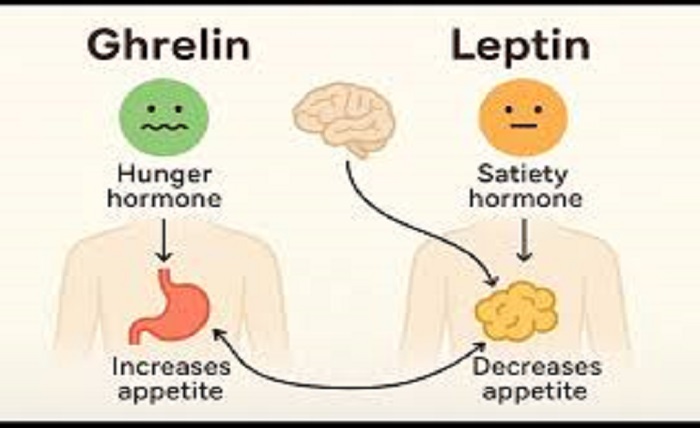
Hunger, appetite, and satiety are part of a complex biological process involving the brain, stomach, fat cells, and hormones. Hunger is the body’s need for energy, while appetite is the desire to eat, influenced by hunger, emotions, or social cues. Satiety signals when you’ve had enough.
The Messengers: Hormonal Regulation
Your body operates like a highly sophisticated communication network. The primary way your gut and brain talk to each other is through hormones. While many hormones play a role in digestion, two key players are often referred to as the “hunger hormones“: ghrelin and leptin.
Ghrelin: The “Go” Signal
Ghrelin is often called the “hunger hormone.” It is produced primarily in the stomach and signals the brain that your body needs energy. When your stomach is empty, ghrelin levels rise, traveling to the brain to stimulate appetite.
Think of ghrelin as a persistent alarm clock. It spikes before meals and drops after you eat. Interestingly, ghrelin levels can also rise when you are under stress, which explains why many people reach for comfort foods during difficult times.
Leptin: The “Stop” Signal
On the other side of the equation is leptin, the “satiety hormone.” Leptin is produced by your fat cells (adipose tissue). Its job is to tell your brain how much energy you have stored. When fat stores are sufficient, leptin levels are high, signaling to the brain that you don’t need to eat and that your metabolism can run at a normal rate.
However, this system isn’t foolproof. In cases of obesity, individuals often have very high levels of leptin because they have more fat cells. You might think this would mean they never feel hungry, but the opposite often happens. The brain stops responding to the signal, a condition known as “leptin resistance.” The brain mistakenly thinks the body is starving, so it pumps up the hunger signals to conserve energy and encourage eating.
GLP-1 and PYY
There are other important chemical messengers, such as Glucagon-like peptide-1 (GLP-1) and Peptide YY (PYY). These are released in the gut after you eat and work to slow down the emptying of the stomach, helping you feel full for longer.
This biological pathway is significant in modern medicine. Because GLP-1 is so effective at signaling fullness, scientists have developed treatments that mimic its effects. You may have heard of medications like semaglutide for weight loss, like those available in Sandy, UT, which function by replicating this natural satiety signal to help manage appetite.
The Control Center: Neural Pathways
While hormones carry the messages, the brain is the CEO making the final executive decisions. The hypothalamus is the region of the brain responsible for regulating energy balance. It receives signals from ghrelin, leptin, and insulin, processing them to decide whether to stimulate or suppress appetite.
However, the hypothalamus doesn’t work alone. It competes with the brain’s “reward system,” primarily driven by dopamine. This is where “hedonic hunger” comes into play—eating for pleasure rather than energy.
High-calorie foods, especially those rich in sugar and fat, trigger a release of dopamine similar to the way certain drugs do. This reward pathway can override the hypothalamus. Even if your stomach is full and your leptin levels are high, the reward system can scream, “But that cake looks delicious!” This evolutionary trait helped our ancestors survive by encouraging them to stock up on calorie-dense foods when they were available, but in a modern food environment, it often leads to overeating.
Factors Influencing Appetite
Biology provides the hardware, but your environment and psychology provide the software. Several external and internal factors can hijack or influence your appetite regulation system.
Psychological Factors
Emotions are a powerful appetite stimulant. Boredom, sadness, anxiety, and happiness can all trigger the desire to eat. This is often an attempt to regulate emotions rather than satisfy a caloric need. Stress, in particular, triggers the release of cortisol, which can increase appetite and specifically drive cravings for sugary or salty foods.
Environmental Cues
We are visually driven creatures. The size of your plate, the lighting in a room, and the people you are with can all dictate how much you eat. Studies have consistently shown that people eat more when served larger portions, regardless of their actual hunger levels. Similarly, we tend to mimic the eating behaviors of those around us; if your dining companion orders a dessert, you are statistically more likely to order one too.
Dietary Composition
Not all calories are created equal when it comes to satiety. Highly processed foods are often engineered to be “hyper-palatable,” meaning they bypass the body’s fullness signals. Conversely, the macronutrient composition of your meal dictates how long you stay full. Protein and fiber are the two most satiating components of food. A meal lacking in these will likely leave you looking for a snack shortly after finishing.
How to Achieve Satiety Naturally
Understanding the science is the first step. Applying it is the second. Here are practical ways to work with your biology to feel fuller and manage your appetite.
Prioritize Protein
Protein is the most satiating macronutrient. It reduces levels of the hunger hormone ghrelin while boosting the appetite-reducing hormones GLP-1 and PYY. Aim to include a source of protein—like eggs, yogurt, lean meat, or legumes—at every meal.
Load Up on Fiber
Fiber adds bulk to your diet without adding significant calories. It physically stretches the stomach, which sends immediate fullness signals to the brain. Furthermore, fiber slows down digestion, providing a steady stream of energy rather than a sugar spike and crash. Vegetables, fruits, whole grains, and beans are excellent sources.
Stay Hydrated
Thirst is frequently mistaken for hunger. Before reaching for a snack, try drinking a glass of water. Additionally, high-volume foods that contain a lot of water (like soups, salads, and melons) can help you feel full on fewer calories.
Sleep Well
Never underestimate the power of rest. Sleep deprivation disrupts the balance of hunger hormones. When you don’t sleep enough, your ghrelin levels spike and your leptin levels plummet. This is why you often crave carbohydrates and junk food after a poor night’s sleep.
Practice Mindful Eating
It takes about 20 minutes for your gut to signal to your brain that you are full. If you inhale your lunch in five minutes while scrolling through your phone, you miss that window. Slow down, chew thoroughly, and pay attention to the texture and taste of your food. This gives your hormones time to do their job.
Conclusion
Appetite regulation is a complex symphony of biological and environmental factors. It is not as simple as “calories in, calories out” because the human body is designed to fight for survival, often interpreting weight loss as a threat.