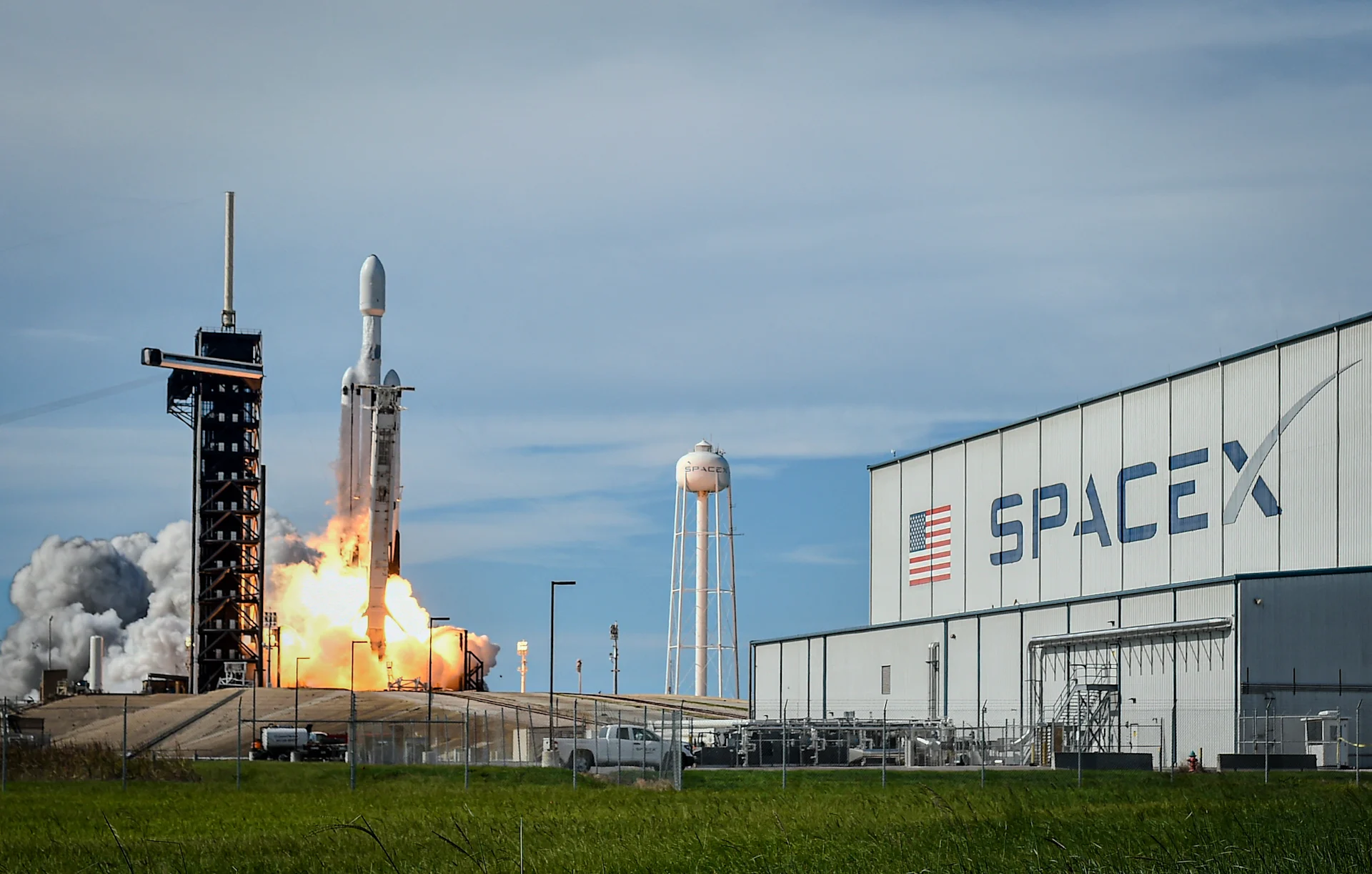
Private aerospace companies rarely generate the level of speculation seen around Elon Musk’s rocket manufacturer. Financial analysts, technology observers, along with retail traders continue to examine whether the company might eventually enter public markets. Conversations surrounding a possible SpaceX IPO frequently appear in investment discussions, not because the listing has been confirmed, but because the company represents one of the most valuable private ventures in the global aerospace sector.
Interest comes from multiple directions. Satellite internet deployment, reusable launch systems, along with rapid commercial space development have pushed the company into a unique strategic position. For market participants, the idea of public access to such a firm raises questions about valuation, timing, and market impact. These discussions are shaping expectations across both technology and equity markets.
Why Private Aerospace Companies Attract Investor Attention
Space exploration used to be dominated by national agencies, but private capital has significantly reshaped the sector. Companies building launch vehicles, satellite infrastructure, plus orbital logistics have introduced commercial competition into an industry previously limited to government programs. Investors follow these developments closely because aerospace innovation often drives large technological ecosystems.
High capital requirements traditionally discouraged private investment in space technology. However, improvements in reusable rocket design and commercial satellite demand have lowered operational costs while expanding revenue potential. As a result, venture funding has poured into space startups, creating several privately valued aerospace companies with multibillion-dollar valuations.
The Strategic Position of SpaceX in the Commercial Space Economy
Few companies hold the same operational influence within the modern space industry. The organization has built launch vehicles capable of reusable missions, dramatically lowering payload costs while increasing launch frequency. This engineering capability has positioned the firm as a central provider for both government contracts and commercial satellite deployments.
Starlink satellite internet expansion adds another dimension to the company’s strategic footprint. Thousands of satellites already operate in low Earth orbit, delivering connectivity services in numerous regions. Revenue from these services may eventually support broader space transportation goals while reinforcing the company’s long-term economic sustainability.
Reusable Rocket Technology
Reusable launch systems fundamentally changed the economics of orbital transport. Rockets that once required full replacement after each launch can now return, land, and be prepared for future missions. This reduces manufacturing expenses and increases launch cadence, strengthening long-term operational efficiency.
Satellite Internet Expansion
Large constellations of low Earth orbit satellites allow broadband coverage in remote regions where terrestrial networks remain limited. These services generate recurring subscription revenue, which investors typically view as more predictable than project-based aerospace contracts.
Understanding the Market Discussion Around a
SpaceX IPO
Financial analysts frequently debate how a public listing could reshape technology investment. While the company remains privately held, discussions about a SpaceX IPO often center on potential valuation ranges and structural considerations. Market participants examine whether aerospace revenue streams could support the scale expected from public technology companies.
One important factor involves the separation between launch operations and satellite internet services. Some analysts speculate that different divisions could pursue independent financing strategies. A satellite communication business with recurring subscription income may appeal differently to investors compared with a launch infrastructure provider.
Factors That Could Influence the Timing of a Public Offering
Public listings require more than strong technological innovation. Companies must also demonstrate predictable revenue generation, transparent governance structures, and scalable operational models. These elements determine whether institutional investors view a business as ready for public capital markets.
Aerospace ventures face additional complexity because of regulatory oversight and large infrastructure investments. Launch vehicles require extensive safety certification, international compliance approvals, and continuous engineering development. All of these factors influence financial forecasting and investor risk evaluation.
Market Conditions
Equity market sentiment plays a significant role in determining whether technology companies pursue public listings. Periods of strong investor confidence typically produce higher valuations, encouraging companies to enter public markets. Conversely, uncertain economic conditions can delay listing plans.
Revenue Stability
Institutional investors usually prioritize stable revenue streams. Satellite internet subscriptions may provide recurring cash flow, while launch services often depend on contract schedules. Analysts therefore evaluate the balance between these two business models when estimating long-term profitability.
Capital Requirements
Space infrastructure development demands substantial financial investment. Launch vehicles, manufacturing facilities, satellite production lines, plus ground infrastructure all require ongoing funding. Access to public capital markets could theoretically support these initiatives, although private funding has so far remained significant.
Potential Impact on the Technology and Aerospace Investment Landscape
If a major aerospace company eventually entered public markets, the ripple effects could extend far beyond the space sector. Technology indices, growth funds, and venture capital portfolios might all adjust their strategies in response to the emergence of a publicly traded space infrastructure firm.
A successful listing could also stimulate broader investor interest in satellite communication, orbital logistics, and planetary exploration technologies. Companies operating in adjacent industries might experience increased funding opportunities as capital flows toward the expanding commercial space economy.
Institutional Investor Participation
Large asset managers often seek exposure to emerging technology sectors. A major aerospace listing could provide institutions with a direct investment vehicle tied to commercial space infrastructure rather than traditional defense contractors.
Retail Market Engagement
Retail investors increasingly follow high profile technology companies. Public availability of a space transportation business could attract individual traders interested in participating in the growth of commercial space development.
Final Thoughts
Speculation about a SpaceX IPO reflects broader interest in the future of private space infrastructure and commercial satellite services. Investors, analysts, along with technology observers continue evaluating how aerospace innovation might translate into public market participation. Whether such a listing occurs in the near future or remains a long-term possibility, the conversation itself highlights how significantly the commercial space industry has evolved.
The continued growth of reusable launch systems, satellite connectivity networks, plus private aerospace funding suggests that space technology is moving steadily toward a mature economic sector. Market participants will therefore keep monitoring operational milestones, financial indicators, and regulatory developments that could shape any future listing scenario.