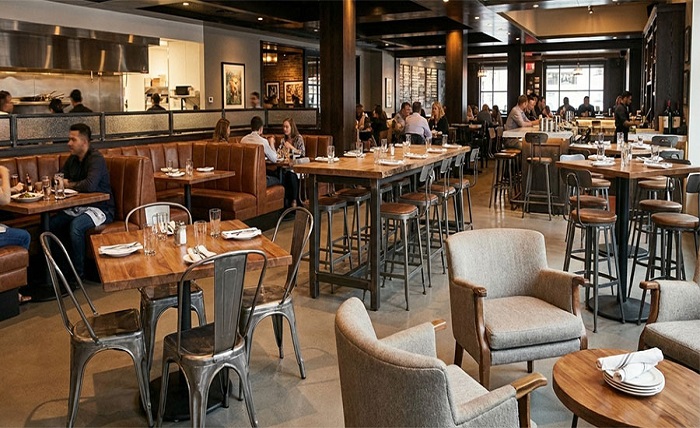
Investors read restaurant deals the way surveyors read land: kitchen equipment gets appraised, the lease gets picked apart clause by clause, and goodwill gets argued over for weeks. Then comes the seating, fifty or a hundred pieces of income-producing equipment, waved through as “fixtures and fittings” in a single line.
That line deserves a second look. A dining room’s restaurant furniture determines its cover count, its turn speed, and a surprising share of its guest experience, which makes it one of the few assets in the building that directly manufactures revenue. Treating it as decor on the books means mispricing it in every deal it passes through.
The Line Item That Outearns Its Category
Consider what the furniture actually does for the money. It converts square footage into sellable seats, hour after hour, for as long as the doors stay open. No other fixture in the room makes that claim. The paint does not seat anyone. The sound system has never turned a table.
A 60-seat room grossing average revenue per seat of a few thousand pounds a year is running its entire income through the furniture, and the furniture’s condition quietly taxes or boosts every one of those pounds.
Reading the Seats Like a Surveyor
Due diligence on a restaurant purchase should walk the floor with the same discipline applied to the kitchen. Age, joinery condition, upholstery wear, and standardization all translate into a number.
- A standardized fleet of commercial-grade seating in mid-life: an asset with years of service left, priced accordingly.
- A patchwork of residential product held together with brackets: a liability wearing an asset’s clothes, with a full refit hiding inside it.
- Mixed vintages of quality product: a phased replacement schedule, which is a negotiating document if the buyer writes it first.
Two rooms with identical menus and identical rents can carry a five-figure difference in true furniture position, and most sale prices never reflect it.
The Depreciation Angle Buyers Ignore
Furniture and fixtures typically depreciate over 7 years under standard schedules, and tax guidance such as IRS Publication 946 spells out how that expense is captured year by year. The mechanics matter less than the mindset: depreciation forces an owner to admit that seating is consumed, like stock, only slower.
Sellers near the end of a depreciation cycle are often selling rooms near the end of a physical one too. A buyer who checks both clocks, the tax clock and the wear clock, knows more about the next five years of capital calls than the P&L will ever volunteer.
Where the Value Survives a Downturn
Hard times make the case sharper. When a venue fails, the balance sheet gets liquidated, and commercial furniture is one of the few contents categories with a genuine secondary market. Standardized chairs sell in lots to the next optimist within weeks. Custom banquettes cut to one room’s walls sell for scrap value or cost money to remove.
The specification decision made at fit-out was therefore also a liquidity decision. Product that many rooms can use holds value the way standard machinery holds value. Product only one room can use is sunk the day it is bolted down.
The Refit as an Investment Case
Refurbishing is frequently viewed by owners as a deferrable cost. Surprisingly competitive when framed as an investment. A package that adds 6 seats through improved dimensions, survives a decade and lifts dwell time on the top profit categories has an internal rate of return that most side projects can’t match.
It only gets compared when someone runs it. The rooms that never prototype the refurbishment keep making the investment decision by default, choosing the status quo each year without pricing it.
Signals for the Buy-Side
For anyone evaluating hospitality deals, three furniture questions cut through quickly. When was the seating bought, and from whom? What would matching replacements cost today? And does the current layout leave covers on the table that better-dimensioned product would recover?
Sellers with crisp answers usually run tight operations everywhere else. Sellers who shrug at the questions are revealing how the rest of the business was managed, one wobbly chair at a time.
The Lease Clause That Meets the Chairs
One more angle deserves attention in any hospitality deal: how the furniture interacts with the lease. Fixed banquettes and built-in seating often legally attach to the premises, which means a departing tenant may be leaving five figures of fit-out behind for the landlord. Freestanding product walks out the door with the business and its sale value.
Buyers and founders alike should read the alterations clause with the floor plan open. The same seating budget, split differently between fixed and freestanding, produces materially different exit positions, and the time to know that is before the fit-out, never during the move-out.
An Asset Register Worth Sitting On
The most useful step costs nothing: put the furniture on the asset register properly with purchase dates, unit costs and a replacement schedule and evaluate it annually with the equipment list.
Once spotted, it is dealt with. When it’s well-managed, it ceases to surprise anyone. And in a business where the majority of shocks are expensive, a dining room that doesn’t provide one is quietly exceeding its category.