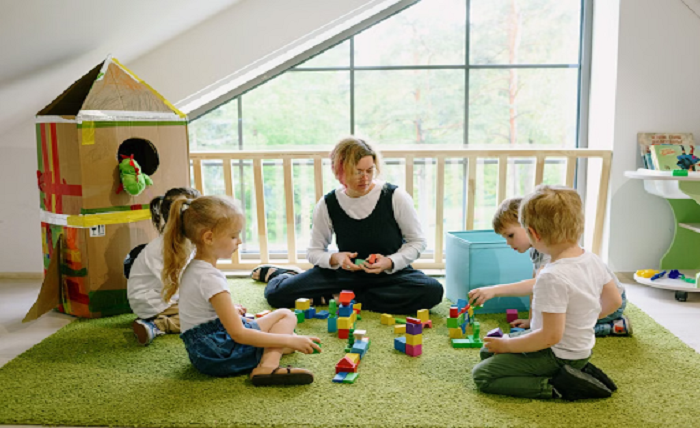
Playgroups can provide young children with opportunities to develop social, communication, motor, and early learning skills in a structured environment. For families in Singapore, different early childhood providers offer programmes designed around play, exploration, interaction, and age-appropriate learning.
Parents considering a KiddiWinkie Playgroup in Singapore can also compare other established early childhood education providers. Each organisation may take a different approach to curriculum design, classroom activities, teacher interaction, and children’s development.
1. KiddiWinkie
KiddiWinkie is an early childhood education provider in Singapore offering programmes for young children, including playgroup-level education. Its approach combines learning with age-appropriate activities that encourage children to explore their surroundings and interact with others.
KiddiWinkie playgroup programmes in Singapore for early childhood learning and social development can help children become more comfortable in a structured learning environment. Activities involving stories, movement, music, art, and guided play can support early communication and social development while keeping learning engaging.
2. EtonHouse International Education Group
EtonHouse provides early childhood education and has established centres across Singapore and other locations. Its programmes incorporate play and exploration into early learning, with environments designed to encourage curiosity and participation.
The organisation’s approach places emphasis on children’s development and learning through experiences. Classroom activities can provide opportunities for children to develop communication, social interaction, independence, and early problem-solving abilities.
3. MindChamps
MindChamps is an established education provider offering early childhood programmes in Singapore. Its preschool curriculum covers different stages of early development and includes structured learning alongside activities designed for young children.
A playgroup environment can introduce children to routines and group participation while developing foundational skills. Consistent activities can also help children become familiar with classroom expectations before progressing to later preschool stages.
4. My First Skool
My First Skool is a major preschool operator in Singapore with centres located across different neighbourhoods. Its early childhood programmes are designed to support children’s development through learning experiences and interactions.
For younger children, a structured playgroup setting can provide opportunities to practise communication, movement, social behaviour, and basic independence. The availability of centres across Singapore can also make the provider accessible to many families.
5. Pat’s Schoolhouse
Pat’s Schoolhouse offers preschool education for young children in Singapore. Its programmes incorporate different learning experiences designed to support children’s cognitive, social, emotional, and physical development.
Early childhood education can help children build confidence in group environments. Regular opportunities for guided play, creative activities, and interaction with teachers and classmates can support this transition.
6. E-Bridge PreSchool
E-Bridge PreSchool provides early childhood programmes focused on children’s development and learning. Its preschool environment allows children to participate in activities that encourage exploration and interaction.
Play-based activities can be particularly useful during the early years because children can develop skills through practical experiences. Group activities can also encourage communication and cooperation with other children.
7. Skool4Kidz
Skool4Kidz operates preschools in Singapore and provides programmes for different stages of early childhood. Its learning environments are designed to support children’s development through age-appropriate activities.
A quality playgroup programme can introduce young children to basic routines while allowing them to explore through play. Activities can be adapted to children’s developmental stages and interests.
8. Little Skool-House
Little Skool-House provides preschool education and early learning programmes in Singapore. Its curriculum includes experiences designed to support children’s overall development during the early years.
Playgroups can help children develop important foundations before entering more structured preschool levels. Activities that encourage language, movement, creativity, and social interaction can contribute to this preparation.
9. Busy Bees Asia
Busy Bees Asia operates early childhood education services in Singapore and across the region. Its network includes several preschool brands, providing families with different approaches to early education.
Early childhood programmes can support development by giving children regular opportunities to interact with peers and teachers. A consistent learning environment can also help children develop confidence and independence.
10. Odyssey The Global Preschool
Odyssey The Global Preschool provides early childhood education with an emphasis on learning through exploration and meaningful experiences. Its programmes cater to young children at different stages of development.
For playgroup-age children, activities can encourage curiosity, communication, movement, and social interaction. Exposure to varied learning experiences can help children develop skills that support later stages of education.
Benefits of Playgroup Education
Playgroups can provide children with an introduction to structured learning without relying solely on formal academic instruction. Young children can learn through games, stories, music, movement, creative activities, and social interaction.
Regular interaction with peers can also help children develop communication and cooperation skills. Learning how to participate in group activities and follow simple routines can support their transition into preschool.
What to Consider When Choosing a Playgroup
Parents can consider several factors when comparing playgroups. Location is often important because convenient travel arrangements can make regular attendance easier for both children and families.
The curriculum, class size, teacher qualifications, daily schedule, facilities, and learning environment are also worth reviewing. Parents may want to understand how the programme balances structured activities with free exploration and play.
Supporting Development Through Play
Play is an important part of early childhood development because it allows children to experiment, communicate, and solve simple problems. Activities can also encourage physical movement and coordination.
Different children may respond differently to learning environments. A suitable playgroup should therefore provide opportunities for children to participate at a pace appropriate to their developmental stage while receiving guidance from teachers.
Preparing for Preschool
Playgroup can serve as an early introduction to the routines associated with preschool. Children can become familiar with spending time away from home, interacting with teachers, following schedules, and participating in group activities.
These experiences can make the transition to subsequent preschool levels more comfortable. Parents can support the process by maintaining consistent routines at home and encouraging children to talk about their daily experiences.
Conclusion
Playgroups can provide young children with valuable opportunities to learn through play, interaction, and exploration. KiddiWinkie, EtonHouse, MindChamps, My First Skool, Pat’s Schoolhouse, E-Bridge PreSchool, Skool4Kidz, Little Skool-House, Busy Bees Asia, and Odyssey The Global Preschool are among the established early childhood education providers in Singapore.
When choosing a programme, families should consider the learning approach, location, environment, teacher support, schedule, and the child’s individual needs. A suitable playgroup can provide a positive foundation for social development, communication, independence, and future learning.