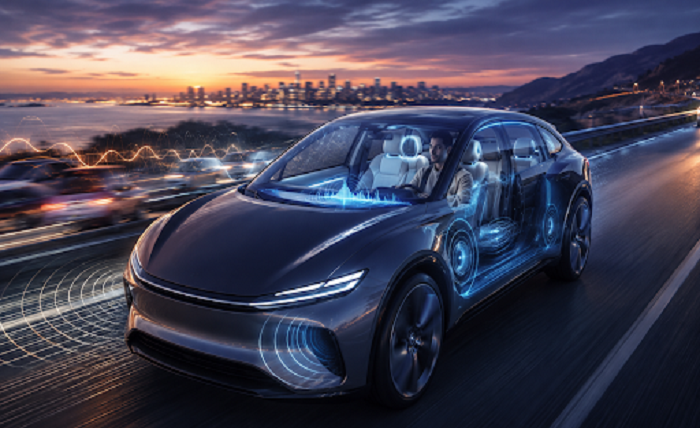
For more than a century, the sound of a car has been inseparable from the experience of driving. The mechanical rhythm of combustion engines, the rise and fall of revs, the exhaust note under load, and even the subtle vibrations through the cabin all formed a sensory language that drivers learned to interpret instinctively.
Today, that language is changing. Electric vehicles, advanced insulation materials, and increasingly sophisticated driver assistance systems are reshaping not just how cars perform, but how they sound—or, in some cases, how they deliberately do not sound.
The modern driving experience is becoming quieter, more controlled, and more curated. And with that shift comes a subtle but important cultural question: what happens to driving when sound is no longer a defining feature?
The Era When Noise Defined the Machine
In traditional internal combustion vehicles, sound was more than a byproduct of operation. It was feedback. Engine note indicated load, gear changes signalled performance shifts, and mechanical noise communicated health, strain, or inefficiency.
Drivers often relied on auditory cues as much as visual or tactile ones. Enthusiasts in particular developed a deep familiarity with the “personality” of an engine through its sound profile. A rough idle could indicate wear. A high-pitched whine might suggest transmission characteristics. Even tyre noise played a role in reading road conditions.
In this environment, sound was not just background—it was diagnostic.
Electric Vehicles and the Silence Shift
Electric vehicles disrupt this long-standing relationship almost entirely. Without combustion, there is no engine roar, no exhaust tone, and no gear-shift cadence in the traditional sense. What remains is tyre noise, wind resistance, and the faint hum of electric motors under load.
At low speeds, EVs can feel almost unnervingly quiet to drivers accustomed to internal combustion engines. This silence is not accidental. It is a defining characteristic of electric propulsion, designed to reduce urban noise pollution and improve comfort.
However, this quietness introduces new challenges. Pedestrians, cyclists, and even drivers themselves rely heavily on sound for spatial awareness. As a result, many electric vehicles now include artificial sound generation systems at low speeds, designed to make vehicles more detectable in urban environments.
This creates an interesting paradox: silence is both a feature and a problem that must be carefully managed.
The Rise of Sound Insulation and Acoustic Engineering
While electric vehicles are often associated with silence, modern internal combustion and hybrid vehicles are also becoming significantly quieter inside the cabin. This is largely due to advances in sound insulation materials, chassis design, and acoustic engineering.
Manufacturers now design vehicles with layered soundproofing structures that reduce external noise intrusion. Double-glazed windows, foam-filled cavities, and vibration-damping materials all contribute to a more isolated driving environment.
The result is a cabin that feels increasingly detached from the mechanical world outside. Road noise is softened, engine noise is filtered, and even suspension impacts are dampened to create a smoother sensory experience.
This shift is not purely about luxury. It reflects a broader industry trend towards reducing driver fatigue and improving perceived refinement. However, it also alters the emotional texture of driving, making it more controlled but less visceral.
Artificial Soundscapes and Engine Simulation
As natural engine noise fades in electric and hybrid vehicles, manufacturers have begun experimenting with artificial soundscapes. These are not simply warning tones for pedestrians, but carefully designed audio profiles intended to restore emotional feedback for drivers.
In some performance EVs, simulated engine sounds rise and fall with acceleration, mimicking the behaviour of combustion engines. In others, entirely new sonic identities are created—futuristic tones designed to match the character of the vehicle rather than replicate traditional engine noise.
This raises an interesting cultural question. If sound is no longer a byproduct of mechanical action, but a designed feature, what does authenticity mean in the context of driving?
For some drivers, artificial sound enhances engagement. For others, it feels disconnected from the physical reality of the machine. The result is a growing diversity in how sound is used—not as a necessity, but as an optional layer of experience.
Silence as a Psychological Space
Beyond engineering, the reduction of noise has psychological implications. Quieter cabins change how drivers experience time, attention, and even emotion on the road.
Without constant engine noise or mechanical vibration, driving can feel more meditative. Conversations become easier, music becomes more prominent, and long journeys feel less physically demanding. For many, this is a welcome evolution.
However, silence can also introduce a sense of detachment. Some drivers report feeling less “connected” to the act of driving in ultra-quiet vehicles. Without auditory feedback, speed perception can shift, and situational awareness becomes more visually dependent.
This creates a new balance between comfort and engagement—one that manufacturers continue to refine.
The Sound of Safety and Awareness
Modern vehicle sound design is no longer purely about comfort or performance. It is also about safety. Acoustic vehicle alert systems are now widely used in electric and hybrid cars to ensure pedestrians can hear approaching vehicles at low speeds.
These sounds are typically subtle and designed to be noticeable without being intrusive. They often vary with speed and context, creating an acoustic presence that replaces the traditional engine note in urban environments.
Inside the vehicle, auditory alerts also play a growing role in driver assistance systems. Lane warnings, collision alerts, and navigation prompts all contribute to a layered sound environment that is increasingly informational rather than mechanical.
Cultural Shifts in Automotive Identity
As sound changes, so too does the cultural identity of cars. In previous decades, engine noise was often a key part of a vehicle’s character. Certain brands and models were instantly recognisable by their sound alone.
Today, identity is becoming more visual and digital. Lighting design, interface behaviour, software responsiveness, and even subtle interior cues are taking on roles once occupied by engine sound.
This broader shift is also reflected in how drivers personalise and perceive their vehicles. Identity is no longer expressed solely through mechanical performance but through design choices, technology integration, and aesthetic details. Even elements such as plate design and finishing touches contribute to how a vehicle is experienced as a complete object. Companies such as Number 1 Plates exist within this wider landscape of automotive identity, where visual and material expression remains an important part of ownership.
The Future Soundscape of Driving
Looking ahead, the soundscape of vehicles is likely to become even more intentional and layered. Rather than being dominated by mechanical output, sound will increasingly be designed as part of the overall user experience.
Future vehicles may allow drivers to select or customise acoustic profiles, blending natural and artificial sounds depending on mood, environment, or driving mode. Urban vehicles may prioritise near-silence, while performance modes may reintroduce dynamic sound elements to enhance engagement.
At the same time, advances in insulation and electric propulsion suggest that the baseline level of noise will continue to decrease. This will make intentional sound design even more important as a defining feature of the driving experience.
Conclusion: Redefining What We Hear on the Road
The transformation of automotive sound is not simply a technical change. It is a cultural one. As vehicles become quieter, more digital, and more refined, the relationship between driver and machine is being reshaped in subtle but meaningful ways.
Noise, once a constant companion to driving, is becoming optional. Silence, once rare, is becoming standard. And in between, a new soundscape is emerging—one designed rather than discovered.
The future of driving will not be silent or noisy in the traditional sense. It will be curated, adaptive, and increasingly defined by the choices manufacturers and drivers make about what should be heard—and what should remain quiet