Most people expect grief to come with tears. Stress, they assume, will eventually crack the surface. But sometimes nothing comes. You watch a sad film, attend a funeral, or hear devastating news, and your eyes stay dry. Your chest feels hollow. You know you should feel something, but the signal never arrives. That gap between what you expect to feel and what you actually feel has a name: emotional numbness.
This article breaks down what emotional numbness actually is, why it happens, how to recognize it in yourself, and what the research says about getting through it. Whether you have been dealing with this for weeks or years, understanding the mechanics behind it is a useful first step.
What Emotional Numbness Actually Is
Emotional numbness is not the same as being calm or composed. It is a state in which your capacity to feel emotions, both positive and negative, becomes blunted or temporarily switched off. Psychologists sometimes call it emotional blunting or affective numbing. It can be a symptom of a mental health condition, a side effect of medication, or a protective response the nervous system generates under extreme stress.
The brain has a built-in circuit breaker. When emotional pain becomes too intense or too prolonged, certain neural pathways reduce activity in emotion-processing regions like the amygdala and the anterior cingulate cortex. The result is a kind of internal static where feelings exist at a distance rather than registering fully. This is not weakness. It is the brain doing its best to protect you from being overwhelmed.
The problem is that the same mechanism that mutes pain also mutes joy, connection, and motivation. Over time, emotional numbness stops being protective and starts getting in the way of living.
Common Causes of Emotional Numbness
There is rarely a single explanation. Emotional numbness tends to emerge from a cluster of factors, and understanding which ones apply to your situation makes a real difference in how you approach recovery.
Trauma and Post-Traumatic Stress
Trauma is one of the most well-documented causes. In post-traumatic stress disorder, emotional detachment is listed as a core symptom. The National Center for PTSD estimates that about 7 to 8 percent of the U.S. population will develop PTSD at some point in their lives. For many of those people, numbing out is not a choice. It is an automatic response to memories and triggers the nervous system treats as ongoing threats.
Depression
Depression is often described as sadness, but a significant portion of people with depression report feeling nothing at all rather than feeling sad. This flat, colorless quality, called anhedonia, involves a reduced ability to feel pleasure or emotional engagement. According to the World Health Organization, depression affects roughly 280 million people globally, and anhedonia is present in a large proportion of those cases. It is one reason depression can be hard to identify: it does not always look like crying.
Medication Side Effects
Selective serotonin reuptake inhibitors, commonly known as SSRIs, are prescribed to millions of people for depression and anxiety. They are effective for many. But a well-documented side effect is emotional blunting. Research published in the Journal of Psychopharmacology found that up to 46 percent of people taking SSRIs reported some degree of emotional blunting. This is not a sign the medication has failed. It is a known pharmacological effect worth discussing with a prescribing doctor.
Chronic Stress and Burnout
Sustained stress floods the body with cortisol. Over months or years, this hormonal overload can suppress emotional responsiveness. Burnout, recognized by the WHO as an occupational phenomenon, often includes a component of emotional exhaustion that bleeds into numbness. When the tank runs dry, the capacity for emotional reaction can go with it.
Dissociation
Dissociation is a broader category that includes depersonalization, where you feel detached from your own body or thoughts, and derealization, where the world around you feels unreal. Emotional numbness is a frequent companion to dissociative states. Mild dissociation is actually common; surveys suggest that transient dissociative experiences occur in up to 70 percent of the general population at some point.
How Emotional Numbness Shows Up Day to Day
Recognizing emotional numbness in yourself can be tricky, partly because the condition itself dulls your ability to notice your inner states. Some of the most consistent signs include the following.
- Feeling like you are watching your life from behind glass rather than living it directly.
- Finding activities that used to bring pleasure flat or uninteresting.
- Difficulty connecting emotionally with people you care about, even when you want to.
- Going through the motions of daily life without any real sense of engagement.
- Feeling stuck when others expect an emotional reaction from you.
- A general sense that time is passing but nothing feels meaningful.
- Physical sensations like fatigue or a heavy, hollow feeling in the chest.
These signs do not always cluster together. Some people experience only a few. Others feel most of them simultaneously. The pattern matters less than the persistence. If emotional flatness has lasted more than a couple of weeks and is interfering with relationships or daily functioning, it is worth taking seriously.
The Difference Between Numbness and Suppression
It helps to distinguish between two things that can look identical from the outside. Emotional suppression is an active, often conscious process. You feel something, and you push it down. Emotional numbness, by contrast, is more passive. The feeling simply does not arrive. Both can coexist, and both can become habitual over time.
People who have spent years suppressing emotions sometimes cross a threshold where suppression becomes automatic enough that it mimics true numbness. The brain learns to intercept emotional signals before they reach conscious awareness. This is one reason therapy focused on emotional processing, rather than just symptom management, can be particularly effective for long-standing numbness.
| Feature | Emotional Suppression | Emotional Numbness |
| Awareness of underlying feeling | Usually present | Often absent |
| Effort involved | Active and deliberate | Passive or automatic |
| Typical trigger | Social situations, fear of judgment | Trauma, depression, burnout, medication |
| Physical tension | Common | Less common; more likely fatigue |
| Can be consciously reversed | Sometimes, with practice | Usually requires professional support |
| Associated conditions | Anxiety, avoidant coping | PTSD, depression, dissociation, SSRI use |
When Someone Says They Cannot Cry
Crying is often used as a shorthand for emotional access. Culturally, we treat tears as proof that someone is feeling something real. So when a person finds themselves in a situation where they genuinely feel i can’t cry, even during moments that would normally produce tears, it can trigger a secondary layer of distress: confusion, shame, or the fear that something is permanently broken inside them.
That secondary distress deserves attention. The inability to cry is not a character flaw or a sign of emotional shallowness. It is a symptom, and like most symptoms it points toward something that can be understood and addressed. The physiology of crying is actually complex; it involves the autonomic nervous system, hormonal signals, and learned emotional associations. When the system that produces tears is suppressed by stress hormones, neurological changes from trauma, or medication effects, the physical act of crying may simply become unavailable for a period of time.
What Actually Helps
There is no single fix, and anyone selling one should be treated with skepticism. What research does support is a combination of approaches tailored to the underlying cause.
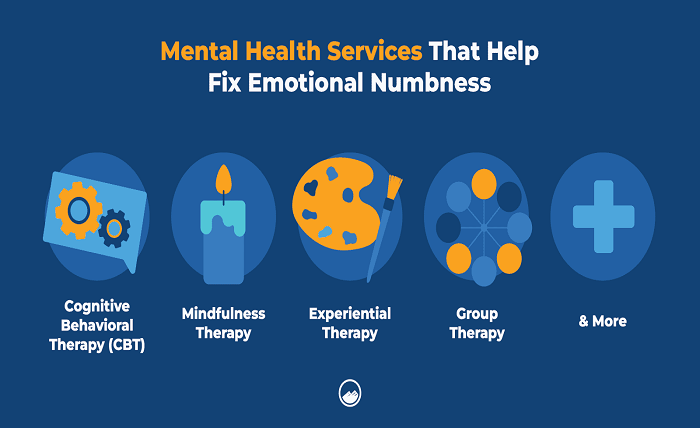
- Therapy focused on emotional processing. Approaches like EMDR for trauma, somatic therapy, and emotion-focused therapy have evidence behind them for restoring emotional access. Standard talk therapy can also help, particularly when the therapist actively works on helping you identify and name emotional states.
- Medication review. If emotional blunting started or worsened after beginning a psychiatric medication, a conversation with a prescribing physician about dosage adjustment or alternative medications is a reasonable step. Do not stop medication without guidance.
- Reducing chronic stress load. This is easier said than done, but consistent sleep, reduced workload where possible, and regular physical movement all affect cortisol regulation and emotional responsiveness over time.
- Gradual re-exposure to meaningful experiences. Scheduling small, low-pressure activities that once carried positive emotional weight, not to force feeling, but to gently re-engage the brain’s reward circuitry.
- Body-based practices. Yoga, breathwork, and even cold water exposure have shown preliminary evidence for activating the parasympathetic nervous system and reducing emotional blunting associated with hyperarousal states.
- Community and connection. Social engagement, even when it feels hollow at first, has a regulatory effect on the nervous system. Consistent, low-demand connection with trusted people tends to help more than isolation.
Progress is rarely linear. Many people report that emotional capacity returns in waves rather than all at once. A moment of genuine laughter, a sudden wave of grief, a flicker of excitement about something small: these are often the first signs that the system is coming back online. They can feel disorienting after a long period of flatness, but they are worth noticing.
A Note on Seeking Support
Emotional numbness that persists for more than a few weeks, that is interfering with relationships, work, or daily life, or that is accompanied by thoughts of self-harm warrants professional attention. A primary care physician, psychologist, or licensed therapist can help identify the specific factors at play and recommend a targeted approach. Numbness is not a permanent state for the vast majority of people. With the right understanding and support, emotional access tends to return.
Understanding what is happening in your brain and body when feelings go quiet is genuinely useful. It removes some of the shame and confusion that can make the condition worse. Emotional numbness is a signal, not a verdict. Paying attention to that signal, rather than waiting for it to resolve on its own, is usually the more effective path forward