Something happens. It might last a few seconds or stretch across years. And then, long after the event is over, the body keeps responding as though it never ended. Heart rate spikes at a familiar smell. Sleep fractures for no clear reason. Relationships feel like minefields. For millions of people, these experiences are not signs of weakness or overreaction. They are the predictable result of how the human brain processes overwhelming stress.
This article breaks down what trauma actually does inside the brain and body, why its effects can last for decades, and what current research tells us about why some people seem more vulnerable to lasting symptoms than others. Understanding the biology behind trauma is not just academic; it changes how we think about suffering, resilience, and recovery.
What Happens in the Brain During a Traumatic Event
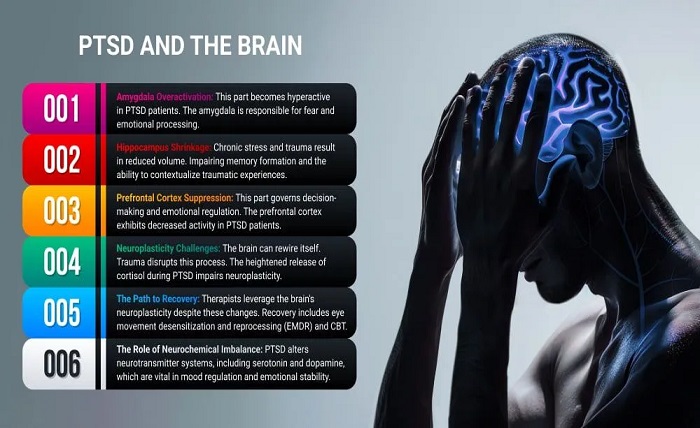
The brain has a built-in emergency system centered largely on the amygdala, a small almond-shaped structure that acts as an alarm. When it detects a serious threat, it triggers a rapid hormonal cascade. Adrenaline and cortisol flood the body. Heart rate climbs. Blood shifts toward the muscles. Digestion pauses. Attention narrows to the immediate danger. All of this happens in milliseconds, well before the thinking brain has a chance to weigh in.
At the same time, the prefrontal cortex, the region responsible for rational thought, decision-making, and emotional regulation, goes relatively offline. This is not a malfunction. It is an adaptive strategy. In a genuine life-or-death moment, analytical thinking is slower than you need. The brain trades precision for speed.
What makes trauma different from ordinary stress is that this emergency response does not fully reset afterward. The nervous system can get stuck in a state of high alert, continuing to scan for danger even when the environment is safe. Researchers sometimes describe this as a dysregulated stress response, and it underlies a wide range of symptoms that show up in the days, months, or years following a traumatic event.
The Nervous System and the Freeze Response
Most people are familiar with the fight-or-flight response, but there is a third option the nervous system can choose: freeze. Described in detail by psychiatrist and researcher Stephen Porges through his Polyvagal Theory, this freeze state is mediated by a more ancient branch of the vagus nerve and kicks in when fight or flight seems futile. The body essentially shuts down, dissociates, or collapses as a last-ditch survival mechanism.
Freeze responses are extremely common in trauma, particularly when the person had no ability to escape or fight back. Children experiencing abuse, adults in situations of captivity or coercion, and people caught in accidents they could not control often report this kind of shutdown. Understanding that freeze is a biological reflex, not a choice, has significant implications for how trauma survivors understand their own reactions during an event.
The challenge is that incomplete freeze responses can leave residual tension and arousal locked in the body. Somatic therapists like Peter Levine have argued that allowing the body to complete these interrupted survival responses is a key part of processing traumatic experience. This body-focused perspective has gained increasing empirical support over the past two decades.
How Trauma Changes Brain Structure Over Time
Trauma does not just affect behavior. Over time, it can produce measurable structural changes in the brain. Neuroimaging studies have found consistent differences in the brains of people with post-traumatic stress disorder compared to those without it. Three regions show up repeatedly in this research.
| Brain Region | Normal Function | Observed Change in Trauma |
| Amygdala | Threat detection and emotional memory | Increased reactivity and volume in some studies |
| Hippocampus | Contextual memory and stress regulation | Reduced volume, associated with memory fragmentation |
| Prefrontal Cortex | Rational thought, emotional control | Reduced activity, especially under stress |
The hippocampus finding is particularly significant. This region helps the brain place memories in context, essentially tagging them with a time and place so they feel like past events rather than present ones. When hippocampal function is disrupted, traumatic memories can feel immediate and unlocated in time. This is why flashbacks feel so real: the brain is not retrieving a memory the way it normally would. It is re-experiencing it without the contextual frame that would mark it as belonging to the past.
Research published in journals like Biological Psychiatry has shown that the hippocampal volume reduction seen in PTSD is linked to both the severity of trauma exposure and the development of dissociative symptoms. Importantly, some of this reduction appears to be reversible with effective treatment, which points toward the brain’s capacity for recovery even after significant stress.
Why Trauma Symptoms Can Last for Decades
One of the most disorienting aspects of trauma for survivors and clinicians alike is how long its effects can persist. A person might feel fine for years and then find old symptoms resurfacing after a life transition, a new stressor, or even something as subtle as a particular time of year. The science behind this persistence connects to how memory is encoded and retrieved.
Traumatic memories are encoded differently than ordinary memories. Instead of being stored as coherent narratives, they are often fragmented across sensory channels. A sound, a physical sensation, a smell, a visual fragment can each act as a trigger that reactivates the broader threat response. This is why someone might have a strong physiological reaction to something they cannot consciously connect to any specific memory.
The concept of stored trauma captures something important here: the idea that the body and nervous system retain the imprint of overwhelming experiences in ways that go beyond conscious recollection. This is not metaphor. It reflects real patterns of neural encoding, hormonal conditioning, and autonomic nervous system regulation that can remain active long after the original event.
Epigenetic research adds another layer of complexity. Studies in populations affected by severe collective trauma, including Holocaust survivors and their descendants, have found evidence that stress-related gene expression changes can be passed to the next generation. The work of researchers like Rachel Yehuda at Mount Sinai has shown altered cortisol levels and stress reactivity in the children of trauma survivors, suggesting that the biological footprint of overwhelming stress can extend beyond the individual who experienced it.
Risk Factors That Influence Long-Term Impact
Not everyone who experiences a traumatic event develops lasting symptoms, and understanding what shapes that difference matters. Research points to a combination of biological, psychological, and social factors that influence resilience and vulnerability.
- Age at exposure: Trauma during early childhood, when the brain is still forming, tends to have broader and more lasting effects than trauma experienced in adulthood.
- Duration and repetition: Single-incident trauma generally produces different symptom profiles than prolonged or repeated trauma, such as childhood abuse or domestic violence.
- Relationship to the source: Trauma caused by another person, especially a caregiver or trusted figure, tends to be more psychologically complex than impersonal trauma like a natural disaster.
- Social support: Access to safe, consistent relationships in the aftermath of trauma is one of the strongest protective factors identified in the research literature.
- Prior trauma history: Previous traumatic experiences can reduce the threshold at which new events cause lasting dysregulation.
- Biological factors: Genetic variations in stress-response systems, including the HPA axis and serotonin pathways, influence how individuals respond to threat.
The Adverse Childhood Experiences (ACE) study, originally conducted by researchers Vincent Felitti and Robert Anda in collaboration with the Centers for Disease Control and Prevention, remains one of the most cited pieces of evidence on this topic. It found a strong dose-response relationship between the number of adverse childhood experiences and a wide range of negative health outcomes in adulthood, including heart disease, addiction, depression, and shortened life expectancy. The more ACEs a person had, the higher their risk across virtually every category measured.
What the Science Says About Recovery
Recovery from trauma is not a matter of forgetting what happened or deciding to move on. It is a neurobiological process that involves reorganizing how the threat-response system interprets the world. Several evidence-based treatment approaches have been developed with this in mind.
- Trauma-focused cognitive behavioral therapy (TF-CBT): Helps individuals process traumatic memories and restructure the beliefs that formed around them. Supported by a large body of clinical trial evidence.
- Eye Movement Desensitization and Reprocessing (EMDR): Uses bilateral stimulation to help the brain reprocess fragmented traumatic memories into more coherent narrative form. Recognized by the World Health Organization as an effective trauma treatment.
- Somatic therapies: Approaches like Somatic Experiencing focus on completing interrupted physical responses and regulating the autonomic nervous system through body-based interventions.
- Prolonged Exposure therapy: A structured approach that involves gradual, repeated engagement with trauma memories and avoided situations in a controlled therapeutic setting.
- Medication: SSRIs such as sertraline and paroxetine are FDA-approved for PTSD and can help regulate the neurochemical disruptions that sustain symptoms, though they work best in combination with therapy.
There is also growing interest in psychedelic-assisted therapy, particularly MDMA-assisted therapy for PTSD. Phase 3 clinical trials conducted by the Multidisciplinary Association for Psychedelic Studies showed response rates significantly higher than those seen with conventional treatments, though this approach is still working through regulatory review.
What the research consistently shows is that the brain retains a degree of plasticity throughout life. Healing does not require returning to some prior state. It involves building new neural pathways, new patterns of regulation, and new ways of relating to memory and threat. That process takes time, and it usually takes skilled support. But the capacity for it appears to be fundamentally human.