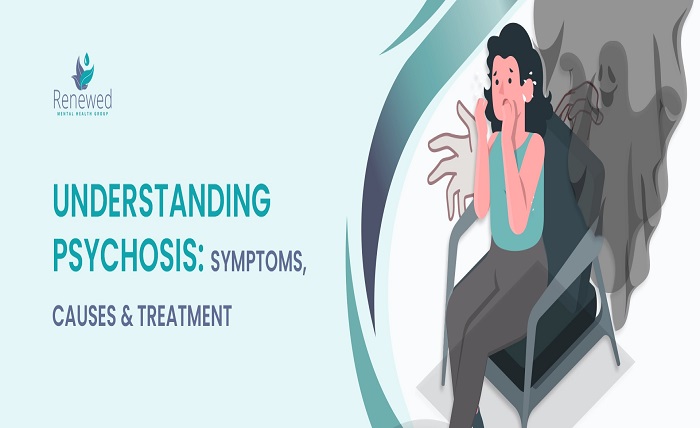
Hearing a voice that no one else can hear. Believing something with absolute certainty that those around you insist is not true. These experiences can be terrifying, both for the person living through them and for the people who love that person. Psychosis is more common than most people realize, and yet it remains one of the most misunderstood conditions in mental health. This article breaks down what psychosis actually is, how it develops, what the warning signs look like, and what treatment genuinely offers.
What Psychosis Actually Is
Psychosis is not a diagnosis on its own. It is a symptom cluster, a state in which a person loses contact with reality in some meaningful way. That loss of contact usually involves hallucinations, delusions, or both. Hallucinations are sensory experiences that occur without an external source. Hearing voices is the most commonly reported type, but hallucinations can also involve vision, smell, touch, or taste. Delusions are fixed false beliefs held with strong conviction despite clear evidence to the contrary.
Psychosis can appear as part of several different conditions, including schizophrenia, bipolar disorder, severe depression, schizoaffective disorder, and certain personality disorders. It can also be triggered by substance use, sleep deprivation, medications, or medical conditions affecting the brain. Because so many different pathways lead to psychosis, treatment always requires a careful assessment of the underlying cause.
How Common Is Psychosis
The numbers are higher than most people expect. According to the National Institute of Mental Health, approximately 3 in 100 people will experience a psychotic episode at some point in their lives. Schizophrenia, one of the most well-known psychotic disorders, affects roughly 1 percent of the global population, according to the World Health Organization. When you factor in psychosis that occurs within bipolar disorder, major depression, and substance-related conditions, the total number of people affected globally runs into the tens of millions.
Early intervention matters enormously. Research consistently shows that the longer psychosis goes untreated, the more difficult recovery becomes. The concept of the “duration of untreated psychosis” or DUP is well established in psychiatric research. Shorter DUP is associated with better long-term outcomes, fewer hospitalizations, and greater functional recovery. Getting an accurate diagnosis and starting treatment quickly is not just helpful; it can genuinely change the trajectory of someone’s life.
Recognizing the Warning Signs
Psychosis rarely appears suddenly out of nowhere. There is typically a prodromal phase, a period before full psychosis develops, during which subtle changes begin to emerge. These early signs are often dismissed as stress, teenage behavior, or a rough patch. Knowing what to look for can make a significant difference.
Early Warning Signs
- Withdrawing from friends, family, and activities previously enjoyed
- Declining performance at school or work without a clear explanation
- Unusual or magical thinking, such as believing in special powers or hidden messages
- Increased suspiciousness or a persistent sense that something is wrong
- Difficulty concentrating or organizing thoughts
- Sleep disturbances, particularly sleeping far more or far less than usual
- Neglecting personal hygiene or self-care
- Flat or inappropriate emotional responses
Acute Psychosis Symptoms
- Hearing, seeing, smelling, or feeling things that others do not perceive
- Holding strong beliefs that are clearly at odds with reality, such as being persecuted or having special powers
- Speaking in a disorganized or incoherent way
- Behaving in a highly unusual or agitated manner
- Extreme emotional distress or emotional flatness
- Inability to distinguish what is real from what is not
What Causes Psychosis
No single cause explains psychosis. Current research points to a combination of genetic vulnerability, brain chemistry, and environmental stressors. People with a family history of psychotic disorders have a higher likelihood of developing one themselves, though having that genetic background does not make it inevitable.
Neurobiologically, psychosis is linked to dysregulation in dopamine pathways in the brain. This is why antipsychotic medications, which primarily act on dopamine receptors, are often effective. Other neurotransmitters, including serotonin and glutamate, also appear to play a role, which is why research into new treatments continues to expand.
Environmental factors can trigger or worsen psychosis in vulnerable individuals. These include heavy cannabis use, particularly high-potency products, trauma, chronic stress, and social isolation. Substance-induced psychosis is a real and often underdiagnosed phenomenon. Some people experience their first psychotic episode during or shortly after a period of heavy drug or alcohol use, and it is not always clear whether the substance caused the psychosis or revealed an underlying predisposition.
| Cause Category | Examples | Notes |
| Primary psychiatric disorder | Schizophrenia, schizoaffective disorder | Usually requires long-term treatment |
| Mood disorder | Bipolar disorder, severe depression | Psychosis resolves as mood stabilizes |
| Substance-induced | Cannabis, stimulants, hallucinogens, alcohol withdrawal | May be temporary but can persist |
| Medical condition | Brain tumor, epilepsy, autoimmune encephalitis, thyroid dysfunction | Treating the condition often reduces psychosis |
| Medication side effect | Steroids, certain antivirals, stimulant medications | Usually resolves when medication is adjusted |
How Psychosis Is Treated
Effective treatment for psychosis almost always involves a combination of medication, therapy, and social support. There is no single approach that works for everyone, and finding the right combination often takes time and patience.
Antipsychotic medications are typically the first-line treatment. They reduce or eliminate hallucinations and delusions for many people. First-generation antipsychotics, sometimes called typical antipsychotics, have been used since the 1950s. Second-generation or atypical antipsychotics, developed later, are now more commonly prescribed because they tend to have a different side effect profile. No medication is without side effects, and finding the right one for a specific person is a process that requires ongoing communication between patient and clinician.
Psychotherapy plays an important role alongside medication. Cognitive behavioral therapy adapted for psychosis, often called CBTp, has solid research behind it. It helps people examine the thinking patterns connected to their symptoms, develop coping strategies, and reduce distress. Family therapy and psychoeducation, which help family members understand what their loved one is experiencing, also improve outcomes significantly.
For families or individuals who are unsure where to start, knowing that specialized psychosis help exists can be genuinely reassuring. Early intervention programs, coordinated specialty care teams, and inpatient psychiatric services each serve different levels of need depending on how acute the situation is.
Coordinated Specialty Care, or CSC, is a treatment model specifically designed for people experiencing a first episode of psychosis. It brings together medication management, therapy, supported employment or education, and family education under one umbrella. Studies funded by the National Institute of Mental Health found that CSC significantly outperformed standard care on multiple outcomes, including symptom reduction and quality of life.
Supporting Someone Experiencing Psychosis
Watching someone you care about experience psychosis is deeply distressing. Knowing how to respond can make a meaningful difference without making things worse.
- Stay calm. Raising your voice or arguing about what is real rarely helps and often escalates distress.
- Do not dismiss or reinforce delusions. Arguing against them tends to increase defensiveness. Simply acknowledging the person’s distress without agreeing with the content can help.
- Reduce stimulation when possible. Busy, loud environments can heighten symptoms.
- Focus on safety first. If the person seems at risk of harming themselves or others, contact emergency services.
- Encourage professional evaluation. Framing it around general well-being rather than the specific symptoms is often more effective.
- Take care of yourself. Caregiver burnout is real. Seeking support from mental health professionals or caregiver groups is a practical and necessary step.
Recovery Is Realistic
The idea that psychosis means a lifetime of severe disability is outdated. Research tells a more hopeful story. A significant portion of people who experience a first psychotic episode go on to recover substantially, especially with early and consistent treatment. Functional recovery, meaning the ability to work, maintain relationships, and live independently, is achievable for many people. Long-term follow-up studies suggest that outcomes vary widely, and factors like early treatment, strong social support, and low substance use are all associated with better prognoses.
Recovery is rarely a straight line. Relapses happen. Medications may need to be adjusted. Life stressors can trigger setbacks. But none of that changes the fundamental point that psychosis is a treatable condition. With the right support, accurate diagnosis, and a treatment plan that is built around the individual rather than a generic template, people do get better. Understanding what psychosis is, taking the warning signs seriously, and knowing that effective treatment exists are the first steps toward that outcome