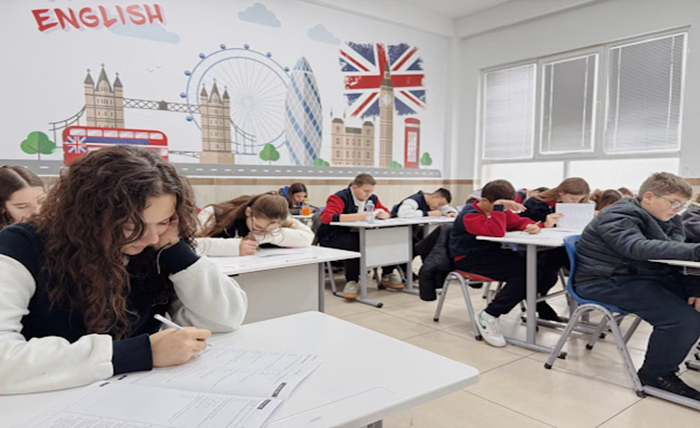
Secondary school English involves much more than answering comprehension questions or writing essays. Students are expected to read critically, organise ideas, explain their views and communicate clearly in both written and spoken forms. As academic expectations increase, these skills become useful across other subjects as well.
A secondary English enrichment class can provide additional opportunities to practise these abilities in a setting that goes beyond regular classroom lessons. Rather than focusing solely on examination preparation, enrichment programmes often give students opportunities to explore language through discussion, writing activities, presentations and other forms of communication. An English enrichment class for Secondary students can further develop critical thinking, communication skills and confidence in using English across different academic and real-life situations.
What Is a Secondary English Enrichment Class?
A secondary English enrichment class is an additional learning programme designed to develop students’ English abilities beyond their regular school lessons.
Some programmes focus on writing and comprehension, while others place greater emphasis on communication, creative work, critical thinking or presentation skills. The activities often involve more interaction than conventional revision exercises.
Enrichment does not necessarily mean covering more difficult material. It can involve approaching familiar language skills from a different angle, giving students opportunities to apply what they know in new situations.
Improving Presentation Skills
English is also a communication subject, so spoken skills deserve attention.
Presentations require students to organise information and communicate it clearly to an audience. This involves more than reading prepared sentences from a slide.
Students need to consider pacing, pronunciation, eye contact, volume and the order in which information is introduced.
A secondary English enrichment class can create a controlled environment where students practise presenting without the pressure of a major school assessment.
Repeated practice also helps students become more familiar with speaking in front of others.
Learning to Participate in Discussions
Class discussions provide another way to develop communication skills.
Students need to listen to what another person has said before responding. They also need to explain their own ideas clearly and respond appropriately when someone disagrees.
These skills are useful beyond English lessons. Group projects, oral presentations and classroom discussions across different subjects all require students to communicate with others.
Enrichment activities can encourage students to support their opinions with reasons rather than giving a short answer without explanation.
Expanding Vocabulary Through Context
Vocabulary development becomes increasingly important during the secondary years. Students encounter more specialised terms and more sophisticated forms of writing as they progress through school.
Simply memorising lists of words has limited value if students do not understand how those words are used.
An enrichment class can introduce vocabulary through reading, discussion and writing tasks. Students then have opportunities to apply new words in context.
This approach also helps students recognise differences between similar words. Choosing the most appropriate word often depends on tone, context and intended meaning.
Encouraging Creative Writing
Creative writing provides students with another way to develop language skills.
Writing a story, character description or narrative requires students to think about structure, vocabulary, pacing and detail. It also encourages them to consider how readers respond to particular descriptions and events.
Creative activities do not replace academic writing. Instead, they provide a different setting for practising language.
A student who experiments with sentence structure and descriptive language in creative work might also become more aware of those techniques when analysing or writing formal texts.
Developing Confidence in English
Confidence often develops through repeated opportunities to use a skill.
A student who rarely speaks during lessons might become more comfortable after taking part in smaller discussions or presentations. Similarly, a student who feels uncertain about writing might become more willing to attempt longer responses after receiving useful feedback.
The purpose of enrichment should not be to create pressure to perform perfectly. Mistakes provide useful information about areas that need more practice.
Constructive feedback helps students understand what they are doing well and what needs improvement.

Supporting Skills Across Other Subjects
English skills have applications beyond English class.
Science students need to explain observations and findings. Humanities students need to interpret sources and construct arguments. Students working on group projects need to communicate ideas and present information.
Clear writing and confident communication therefore support a broad range of academic tasks.
An English enrichment class that develops transferable communication skills can complement learning across the wider school curriculum.
Enrichment Versus Examination Preparation
Examination preparation has an important place in secondary education, but enrichment serves a somewhat different purpose.
Exam-focused lessons often concentrate on question types, time management and examination techniques. Enrichment can provide more room for broader communication, creative work and discussion.
The two approaches do not need to conflict. Stronger comprehension, vocabulary, writing and communication skills can support examination performance while remaining useful beyond the exam room.
The most appropriate balance depends on the student’s needs and academic stage.
Final Thoughts
A secondary English enrichment class can give students additional opportunities to develop skills that extend beyond conventional essay practice. Writing, critical reading, discussion, presentation and creative communication all contribute to becoming a more capable English user.
The benefits are not limited to English assessments. Students use these skills when presenting projects, explaining ideas and working with others across different areas of school life.