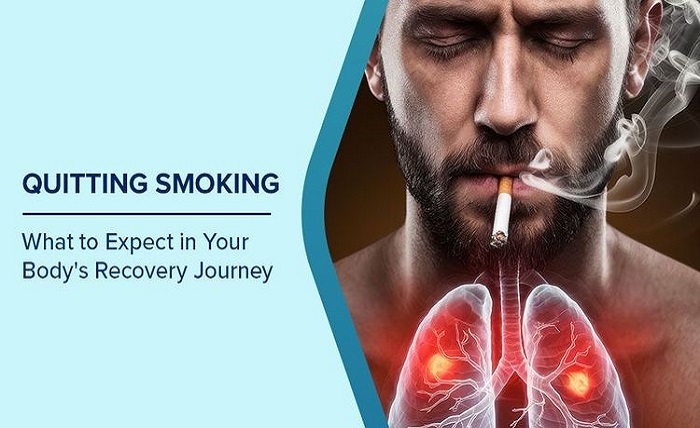
Most people who quit smoking expect to feel better eventually. What surprises them is how quickly some of that recovery actually begins. Within hours of the last cigarette, the body starts correcting course, quietly and persistently, even when the person going through withdrawal feels anything but well. Understanding what is happening under the surface can make the difference between pushing through and giving up.
This article walks through the physiological changes that unfold after quitting, the organs and systems most affected, the timeline you can reasonably expect, and the factors that influence how complete a recovery can be. The science here is genuinely encouraging, though it comes with honest nuance about what smoking damage is reversible and what is not.
The First 24 Hours: Faster Than You Think
Carbon monoxide from cigarette smoke binds to hemoglobin and crowds out oxygen. Within 8 to 12 hours of quitting, blood carbon monoxide levels drop back to normal, and blood oxygen levels rise. That is not a slow, gradual shift. It happens in less than a day. Heart rate and blood pressure, both of which are elevated by nicotine, begin to normalize within roughly 20 minutes of the last cigarette, according to the American Heart Association.
For many ex-smokers, these early hours are dominated by nicotine withdrawal symptoms rather than any noticeable sense of improvement. Irritability, restlessness, and difficulty concentrating are common. That discomfort is real. But so is the physiological repair happening in the background, whether or not it can be felt yet.
The First Few Weeks: Circulation, Taste, and Nerve Recovery
Between two and twelve weeks after quitting, circulation improves noticeably. The small blood vessels in the hands and feet, which smoking constricts through repeated nicotine exposure, begin to function more normally. Physical activity becomes less taxing as the cardiovascular system regains efficiency. Many people report that walking upstairs or exercising no longer leaves them as winded as it did during their smoking years.
Taste and smell also return during this window. Smoking desensitizes the taste buds and damages olfactory receptors. As those systems recover, food can taste dramatically different, sometimes almost overwhelmingly so. This is one of the more immediate and pleasant side effects of quitting that people often do not anticipate.
Coughing can actually increase in the first few weeks, which alarms some new quitters. This is usually the cilia, tiny hair-like structures lining the airways, regenerating and resuming their job of sweeping mucus and debris out of the lungs. The cough is a sign of recovery, not a sign of damage. It typically settles down within a month or two.
What Happens to the Lungs Over Months and Years
The respiratory system gets a lot of attention in smoking cessation discussions, and for good reason. Cigarette smoke causes both acute, reversible damage and chronic structural changes that take far longer to address. For anyone curious about how lungs heal after smoking, the answer involves a combination of cellular repair, reduced inflammation, and the slow restoration of lung function, with the pace and extent depending heavily on how long a person smoked and how heavily.
Within the first year, lung function can improve by as much as 10 percent, according to data published by the U.S. Centers for Disease Control and Prevention. For someone whose lung capacity was already compromised, even a 10 percent gain is clinically meaningful. Mucus production decreases, airway inflammation subsides, and infections like bronchitis become less frequent.
Chronic obstructive pulmonary disease, or COPD, represents a harder case. The destruction of alveoli, the tiny air sacs responsible for gas exchange, is not reversible in the way that airway inflammation is. Quitting will stop the progression of COPD and can reduce symptoms significantly, but the structural damage already done does not rebuild. This is not a reason to delay quitting. It is simply an honest distinction between slowing further harm and undoing past harm.
Cardiovascular Risk: The Numbers Over Time
Heart disease risk drops steadily and substantially after quitting. The timeline below, drawn from data reported by the American Cancer Society and the CDC, gives a realistic picture of what to expect.
| Time After Quitting | Cardiovascular Change |
| 20 minutes | Heart rate and blood pressure begin to drop |
| 12 hours | Carbon monoxide in blood returns to normal |
| 2 to 3 weeks | Heart attack risk begins to decrease |
| 1 year | Risk of coronary heart disease is half that of a current smoker |
| 5 years | Stroke risk falls to that of a non-smoker for many people |
| 10 years | Risk of dying from lung cancer is about half that of a continuing smoker |
| 15 years | Risk of coronary heart disease is comparable to a lifelong non-smoker |
These figures are averages, of course. Individual risk depends on age at quitting, total pack-years of smoking, family history, and other lifestyle factors. But the trend is consistent and well-documented across large population studies: every year away from cigarettes measurably reduces cardiovascular risk.
Factors That Shape How Complete the Recovery Is
Recovery after quitting is not a uniform experience. Several variables influence how much the body can repair itself and how quickly.
- Age at quitting: People who quit before 40 recover more completely and more quickly than those who quit later, though quitting at any age brings meaningful benefit.
- Duration and intensity of smoking: Smoking a pack a day for 30 years causes more cumulative damage than lighter smoking over a shorter period. The body can still recover significantly, but some changes may be permanent.
- Presence of existing disease: Those who already have COPD, emphysema, or cardiovascular disease will experience a halt in progression rather than a full reversal of structural damage.
- Co-occurring habits: Continued alcohol use, poor diet, and physical inactivity slow recovery. Quitting smoking while addressing other health factors produces better outcomes.
- Genetics: Some people have genetic variants that affect how efficiently they metabolize toxins and repair cell damage. This partly explains why some long-term smokers show more resilience than others.
- Secondhand smoke exposure: Continued exposure to secondhand smoke after quitting can undermine respiratory recovery, particularly in enclosed environments.
Mental Health and the Brain After Nicotine
Nicotine is a powerful psychoactive substance that alters dopamine pathways in the brain. Chronic exposure changes the density and sensitivity of nicotinic acetylcholine receptors. When nicotine is removed, those receptors are temporarily dysregulated, which is a large part of why withdrawal feels so difficult.
Brain recovery takes longer than many people expect. Studies using neuroimaging have shown that dopamine receptor levels can take several months to normalize after quitting. During this period, mood instability, anxiety, and difficulty concentrating are common. This is not a character flaw or a sign of weakness. It is neurochemistry adjusting to a new baseline.
Interestingly, long-term data suggests that people who successfully quit smoking report lower rates of anxiety and depression compared to current smokers, despite the short-term psychological discomfort of quitting. The brain does adapt, and for most people, mental health stabilizes and often improves over the months that follow.
What the Research Says About Long-Term Outcomes
A landmark study published in the New England Journal of Medicine found that people who quit smoking between ages 25 and 34 gained roughly 10 years of life expectancy compared to those who continued smoking. Those who quit between 35 and 44 gained about 9 years. Even quitting in middle age or later produced measurable gains in life expectancy and quality of life.
The risk of at least a dozen cancers decreases after quitting, including cancers of the mouth, throat, esophagus, stomach, bladder, kidney, and cervix, in addition to lung cancer. The immune system also recovers, making it easier for the body to fight off infections and, potentially, abnormal cell growth.
Skin, too, benefits over time. Smoking restricts blood flow to the surface of the skin and depletes collagen. Ex-smokers often notice improved skin tone and texture within a year or two of quitting, as circulation improves and oxidative stress decreases.
Putting It Together
Quitting smoking sets off a cascade of biological repairs that begin within minutes and continue for years. Some changes are swift and dramatic. Others are slow and partial, constrained by how much structural damage was done before quitting. Neither of these facts cancels out the other. The body is more resilient than most people give it credit for, and the science on post-cessation recovery is, on balance, a story of genuine and meaningful improvement at almost every stage of the process