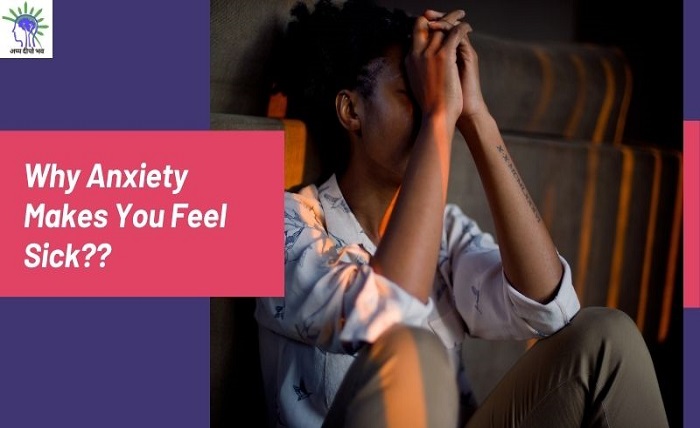
Most people expect anxiety to feel like worry. What they do not expect is the pounding heart at 2 a.m., the sudden nausea before a meeting, or the bone-deep exhaustion that shows up for no obvious reason. Anxiety is not just a mental experience. It has a very real, very physical address in the body, and understanding that connection can change how you interpret and manage what you feel.
This article breaks down the science behind anxiety’s physical effects, explains which symptoms are most commonly misunderstood, and gives you a clearer picture of when those symptoms warrant professional attention.
The Biology Behind Physical Anxiety Symptoms
When your brain perceives a threat, it triggers the autonomic nervous system to release a surge of stress hormones, primarily adrenaline and cortisol. This is the well-known fight-or-flight response. The purpose is survival. Your heart pumps faster to send blood to your muscles. Your breathing quickens to pull in more oxygen. Your digestive system slows because digesting lunch is not a priority when you think you are in danger.
The problem is that the brain does not always distinguish between a physical threat, like a car swerving toward you, and a psychological one, like a difficult email from your boss. Either way, the same cascade of hormones fires. And when anxiety becomes chronic, that cascade fires repeatedly, sometimes without an obvious trigger at all. The body spends so much energy running on high alert that it starts to show the wear in ways that feel entirely physical.
Common Physical Symptoms People Attribute to Other Causes
One of the most frustrating aspects of anxiety-driven physical symptoms is how easily they mimic other conditions. People spend months visiting doctors, running tests, and ruling out illnesses before anyone considers that anxiety may be the source. That is not a failure of medicine. It is a reflection of how convincing the body’s stress response can be.
- Chest tightness or pressure that mimics cardiac symptoms
- Shortness of breath or a feeling of not getting enough air
- Muscle tension, aches, and unexplained soreness
- Headaches, especially tension headaches at the base of the skull
- Gastrointestinal distress including nausea, cramping, and diarrhea
- Dizziness or a sense of being lightheaded without standing up too fast
- Fatigue that is not relieved by sleep
- Tingling or numbness in the hands, feet, or face
- Sweating and chills unrelated to temperature
That last cluster of symptoms, the sweating, chills, body aches, and exhaustion, is where anxiety often catches people completely off guard. Many individuals who experience flu like symptoms from anxiety spend days convinced they are coming down with something, only to find that no virus ever fully develops. The immune system and the stress response are deeply intertwined, and sustained anxiety can produce systemic sensations that are nearly indistinguishable from an early infection.
Anxiety vs. Medical Illness: How to Begin Telling Them Apart
This is genuinely tricky territory, and the short answer is that you should not try to diagnose yourself. That said, there are some patterns that can inform a conversation with a healthcare provider.
| Feature | Anxiety-Related Symptoms | Illness-Related Symptoms |
| Timing | Often tied to stress, conflict, or anticipation of events | Appear regardless of emotional context |
| Duration | Can shift or worsen with mental state; may resolve after stressor passes | Tend to follow a predictable progression |
| Fever | Rarely present; body temperature stays near normal | Fever is common with bacterial or viral infections |
| Response to rest | Rest may help briefly but does not resolve the cause | Rest typically supports recovery over time |
| Accompanying worry | Often paired with excessive or intrusive thoughts | Concern may be present but does not dominate daily thinking |
| Lab and test results | Generally unremarkable despite significant symptoms | Often show measurable changes in bloodwork or imaging |
Again, this table is a starting point for reflection, not a substitute for medical evaluation. Chest pain and shortness of breath, for example, always deserve prompt medical attention no matter how much stress you have been under. The goal here is to help you recognize a pattern worth discussing, not to encourage you to dismiss symptoms.
Why Chronic Anxiety Takes a Particular Toll on the Body
Short-term stress is something the human body handles fairly well. It spikes, the perceived threat resolves, and the nervous system returns to baseline. Chronic anxiety is a different situation entirely. When stress hormones stay elevated over weeks or months, the downstream effects accumulate.
Cortisol, the body’s primary long-term stress hormone, affects almost every organ system. Sustained high cortisol can suppress immune function, which is part of why chronically anxious people often feel run-down and get sick more frequently. According to the American Psychological Association, chronic stress is linked to the six leading causes of death, including heart disease and cancer, partly through its effects on immune regulation and inflammation.
The gut-brain axis is another important piece of this picture. The enteric nervous system, sometimes called the second brain, lines the gastrointestinal tract and communicates constantly with the central nervous system. When anxiety is high, that communication channel carries a lot of distress signals, which is why digestive symptoms are so common and so persistent in people with anxiety disorders.
The Cycle That Keeps Physical Symptoms Going
Here is something that does not get enough attention: physical anxiety symptoms can become a source of anxiety themselves. A person notices an unusual heartbeat, worries it is something serious, and that worry triggers more adrenaline, which makes the heartbeat more noticeable, which increases the worry. This feedback loop is well-documented in the clinical literature and is a core feature of conditions like panic disorder and health anxiety.
Breaking that cycle is one of the primary goals of cognitive behavioral therapy for anxiety. When someone learns to interpret a racing heart as a stress response rather than a sign of cardiac crisis, the emotional charge around the symptom diminishes. And when the emotional charge diminishes, the physical symptom often follows.
Hyperventilation and the Symptoms It Creates
One specific mechanism worth understanding is hyperventilation. When people are anxious, they often breathe too quickly or too shallowly without realizing it. This reduces carbon dioxide levels in the blood, which sounds minor but produces a striking range of symptoms: dizziness, tingling in the extremities, chest tightness, and a sense of unreality or detachment. These symptoms can then escalate anxiety further, fueling the very response that caused them.
Slow, deliberate diaphragmatic breathing is one of the most evidence-based interventions for breaking this particular loop. It is not a cure for anxiety, but it is a practical tool that addresses a real physiological mechanism.
When Physical Symptoms Signal That Support Is Needed
Experiencing occasional physical symptoms from stress is part of being human. But there are clear indicators that the anxiety behind those symptoms has moved beyond what lifestyle adjustments alone can address.
- Physical symptoms are frequent enough to disrupt daily work, relationships, or sleep on a regular basis.
- You have already had medical evaluations that ruled out physical illness, yet symptoms persist.
- You find yourself avoiding situations, activities, or places because of fear that symptoms will occur.
- Worry about your health or body has become a significant part of your daily mental activity.
- You are using alcohol, cannabis, or other substances to manage how you feel physically or emotionally.
- The symptoms have been present for six months or longer with no clear resolution.
These are the kinds of patterns that mental health professionals are trained to assess. Anxiety disorders, including generalized anxiety disorder, panic disorder, and somatic symptom disorder, are among the most treatable conditions in psychiatry. The barrier is rarely the availability of help. More often, it is the gap between recognizing a problem and taking the step to address it.
A Closing Thought on Taking the Body Seriously
Physical symptoms that come from anxiety are real symptoms. They are not imagined, not exaggerated, and not a sign of weakness. They are the body doing exactly what it was designed to do under conditions of perceived threat, just doing it at the wrong times, for too long, and without a clear off switch. Treating them as meaningful information rather than noise is the first step toward addressing both what the body is feeling and what the mind is carrying.