
Precision manufacturing demands absolute accuracy at every stage of the production process. When machinery components shift out of alignment, the consequences ripple through entire production lines, causing defects, downtime, and substantial financial losses.
Small cylindrical fasteners play a critical role in maintaining the tight tolerances that modern manufacturing requires, ensuring equipment operates at peak performance.
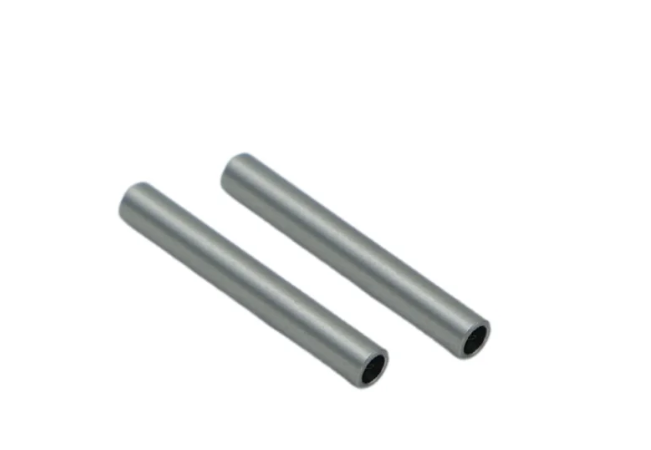
Dowel pins represent one of the most effective solutions for maintaining positional accuracy in mechanical assemblies. These precision-machined components create exact reference points between mating parts, preventing movement that could compromise dimensional accuracy.
The reliability of your production output depends heavily on how well these positioning elements maintain their intended relationships under operational stresses and environmental conditions.
The Critical Role of Alignment in Equipment Performance
Maintaining Precise Component Positioning: Equipment alignment forms the foundation of accurate manufacturing processes. When components drift from their intended positions, even by fractions of a millimetre, the resulting errors multiply throughout the system.
Misaligned parts create uneven stress distributions, leading to premature wear patterns and reduced component lifespan that can cost thousands in replacement parts.
Impact on Production Quality: Poor alignment directly affects product quality and consistency. Manufacturing tolerances become impossible to maintain when reference points shift during operation.
The cumulative effect of multiple misaligned components can render entire production runs unusable, creating waste that erodes profit margins and damages customer relationships.
How Proper Fit Prevents Costly Wear and Tear
Eliminating Movement-Related Damage: Properly fitted positioning elements eliminate the micro-movements that cause fretting wear between mating surfaces. When parts can shift against each other, they create metal debris and surface damage that progressively worsens over time.
This type of wear often goes unnoticed until catastrophic failure occurs, resulting in unexpected downtime and emergency repairs.
Load Distribution and Stress Management: Correct positioning ensures that operational loads distribute evenly across intended load-bearing surfaces. Misaligned components concentrate stresses in areas not designed to handle them, leading to crack initiation and propagation.
The financial impact of stress-related failures extends beyond replacement costs to include lost production time and potential safety hazards.
Key Benefits of Precision Positioning:
- Reduces maintenance frequency by eliminating wear-causing movement
- Extends component lifespan through proper load distribution
- Minimises vibration-related fatigue in critical assemblies
- Prevents contamination ingress at component interfaces
Critical Applications Across Industries
Automotive Manufacturing Excellence: The automotive industry relies heavily on positioning accuracy for engine blocks, transmission assemblies, and suspension components.
Engine timing depends on precise crankshaft and camshaft positioning, where even minimal movement can affect performance and emissions. Assembly line fixtures use these components to ensure consistent part placement during welding and fastening operations.
Aerospace Precision Requirements: Aircraft manufacturing demands the highest levels of positional accuracy for safety-critical components. Wing assemblies, landing gear mechanisms, and engine mounts require positioning elements that maintain their accuracy under extreme temperature variations and vibrational loads.
The consequences of positioning failures in aerospace applications can be catastrophic, making reliable alignment systems essential.
Heavy Machinery Durability: Construction and mining equipment operates in harsh environments where maintaining alignment becomes particularly challenging.
Hydraulic cylinder assemblies, drive train components, and structural joints rely on robust positioning systems to withstand shock loads and environmental contamination. The remote locations where this equipment operates make reliability absolutely crucial for operational continuity.
Installation Techniques for Long-Term Performance
Achieving Optimal Hole Preparation: Successful installation begins with properly prepared mounting holes that match the positioning element’s specifications exactly.
Holes must be drilled perpendicular to mounting surfaces and reamed to achieve the required tolerance fit. Surface finish quality affects the interference fit that prevents movement under operational loads.
Temperature Considerations During Assembly: Thermal expansion differences between materials can affect fit tolerances and positioning accuracy. Installation procedures must account for the operating temperature range to ensure proper fit retention throughout the equipment’s service life.
Cold installation techniques may be necessary for certain material combinations to achieve optimal interference fits.
Quality Verification and Testing: Post-installation verification ensures that positioning accuracy meets design requirements before equipment enters service. Dimensional checks using precision measuring equipment confirm that components remain within specified tolerances.
Periodic re-verification during scheduled maintenance intervals helps identify potential positioning drift before it affects production quality.
Conclusion
Precision positioning elements serve as the unsung heroes of accurate manufacturing, maintaining the tight tolerances that separate professional results from costly failures.
Their role in preventing wear, ensuring alignment, and supporting long-term equipment reliability makes them indispensable across automotive, aerospace, and heavy machinery applications.
Don’t let positioning drift compromise your production quality – invest in proper positioning solutions that deliver the accuracy your operations demand.