
Choosing the correct replacement charger for your MacBook Pro can help avoid delayed charging, overheating, and even irreversible damage.
With a burgeoning market of third-party chargers, not all of them provide the performance and safety that Apple devices require. It is critical to prioritize technical compatibility and construction quality while also considering daily usefulness.
Whether you’re replacing a misplaced charger or purchasing a replacement, knowing the key features can save you time and money. This article will lead you through the best characteristics and user-focused features so you can confidently choose a high-quality MacBook Pro replacement charger.
What Technical Specifications Should You Check?
Wattage and Power Delivery Match Your MacBook Pro
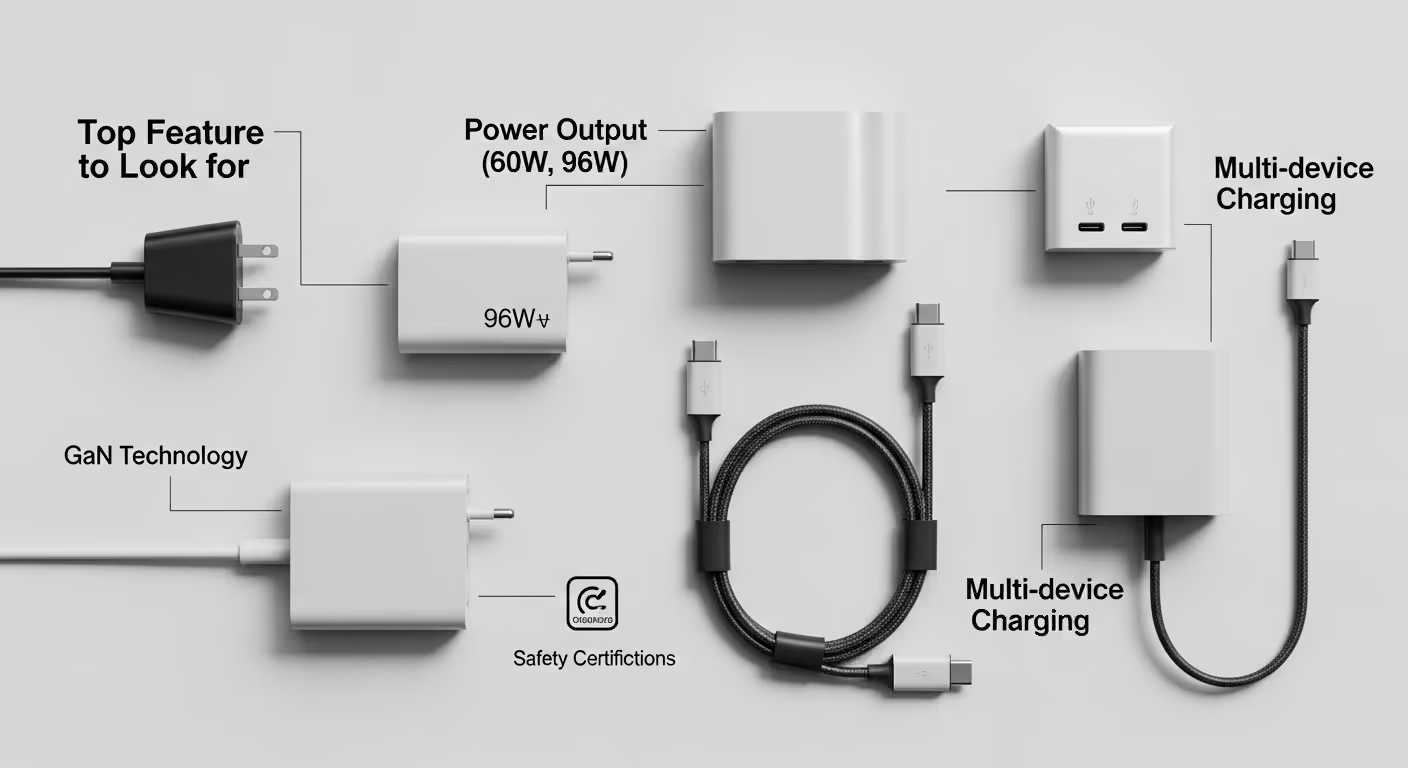
Before buying a macbook charger, always match its wattage to your MacBook Pro’s original requirement. MacBook Pro power requirements vary greatly—13-inch versions normally demand 61W, but 15- and 16-inch ones sometimes require 87W or 96W.
Using a charger with inadequate power causes delayed or no charging at all. Overpowered chargers are safe as long as they enable USB Power Delivery (PD). Check the year and model of your MacBook Pro, then look up the appropriate wattage on Apple’s website or with your original adapter. An exact or greater wattage with PD support guarantees consistent performance and device safety.
USB-C / Power Delivery (PD) and Connector Type Compatibility
All modern MacBook Pros charge using USB-C with Power Delivery (PD), which dynamically regulates voltage and current. When choosing a charger, ensure that it supports USB-C PD and has at least one port rated for the appropriate power.
Not all USB-C ports enable PD, so search for certifications and standards that specify PD 3.0 or above. Avoid using Micro-USB or earlier proprietary connections, as they are incompatible with current devices. Also, ensure that the provided cable supports PD; some inexpensive ones are limited to data transmission or low-watt charging, which might hinder performance or cause overheating during power-intensive operations.
Safety Standards and Build Quality
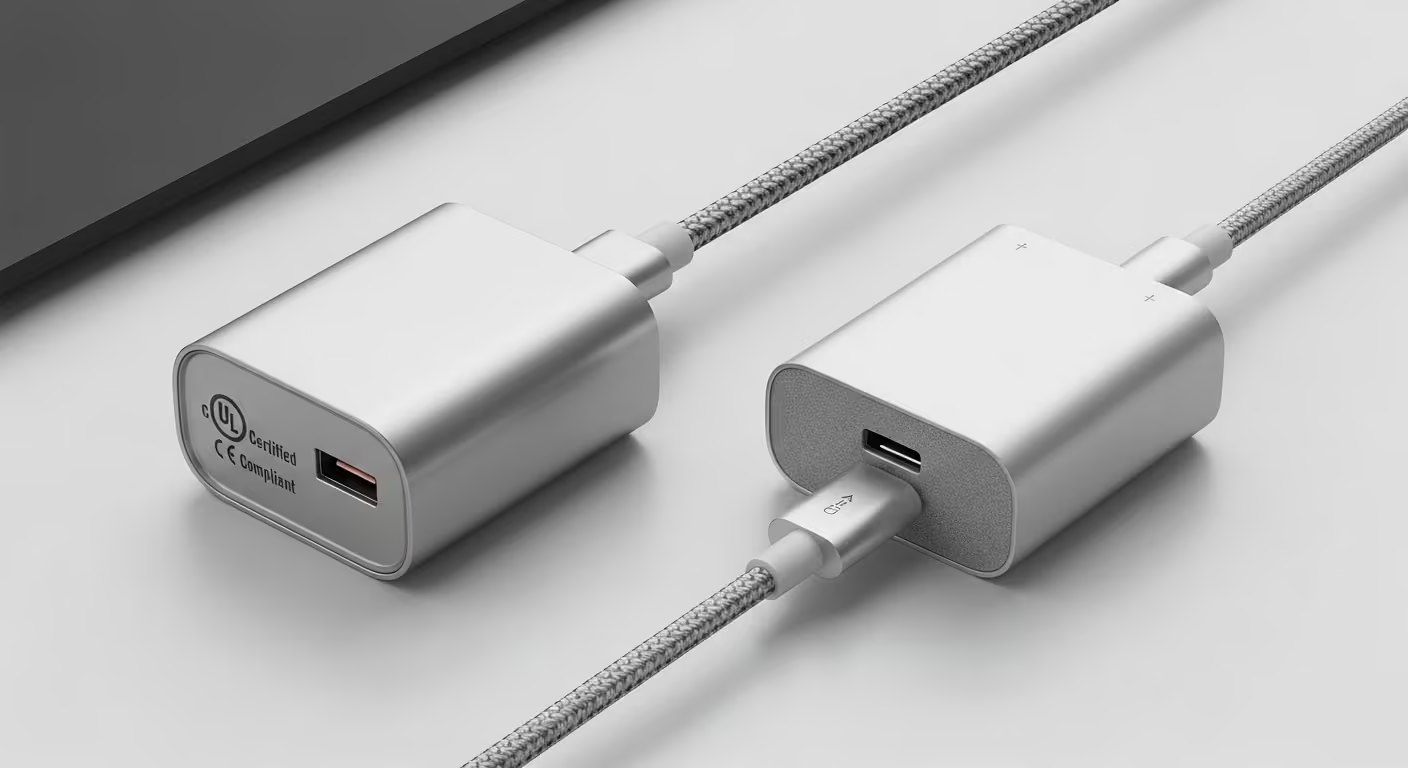
A decent replacement charger complies with international safety standards such as UL, FCC, or CE, ensuring protection against overheating, overcurrent, and short circuits. Build quality is also important—high-quality materials assist in dispersing heat and improve product life.
Look for chargers made of flame-retardant polymers that include built-in surge protection. In product specifications, reputable manufacturers frequently include terms like “Overvoltage Protection (OVP)” or “Short Circuit Protection (SCP)”.
Avoid suspiciously inexpensive chargers with no mentioned certifications, as they might harm your MacBook or cause fires. When it comes to securing high-end technology, safety compliance and robust construction quality must be met without exception.
What Functional and User-Friendly Features Matter Most?
Portability, Size and Travel Readiness
MacBook Pro users on the go require a charger that is lightweight, small, and easy to transport. Bulky chargers occupy valuable suitcase space and add weight. Look for thin designs with folding prongs for simpler carrying and less wear on the plug.
GaN (gallium nitride) chargers are great since they operate cooler and are substantially smaller than previous silicon-based ones while delivering the same amount of power.
Some even include international plug adapters for worldwide travel. Whether you’re commuting, flying, or working remotely, a portable charger keeps you productive without adding extra bulk or tangled wires.
Cable Length, Connector Durability and Multi-Port Options
A charger is only as effective as its wire. Choose one with a cable that is at least 6 feet long for versatile desk or couch configurations. Reinforced connections with strain relief or braided cables help to minimize fraying and breakage, especially if they’re bent or wrapped frequently.
Many new chargers include dual USB-C or USB-A connections, allowing you to charge your MacBook and phone simultaneously. Prioritize PD-compatible multi-port chargers that intelligently distribute wattage, ensuring that all connected devices receive the necessary power.
A long-lasting cable and more port flexibility increase your charger’s versatility and decrease the need for additional accessories.
Brand Reputation, Warranty and Support
Sticking with reputable brands provides improved product reliability and customer service. Top-rated third-party brands such as Anker are well-known for their quality, compatibility, and safety.
These providers frequently offer warranties ranging from 12 to 30 months, giving you peace of mind if something goes wrong. Reliable companies also provide comprehensive product documentation and responsive support staff, which is essential for troubleshooting or replacing broken equipment.
Always study customer reviews on Amazon or tech forums before making a purchase. A firm that backs up its products with warranties and assistance is far less likely to leave you stranded with a broken or hazardous charger.
Conclusion
Finding the appropriate MacBook Pro replacement charger entails more than just purchasing the cheapest choice online. You must confirm technical compatibility, particularly wattage and USB-C PD capability, while verifying that the construction fulfills safety criteria.
Features that promote everyday usage are also vital, such as mobility, multi-port charging, long-lasting cords, and dependable customer service. A well-chosen charger not only charges your MacBook swiftly, but also prevents it from expensive harm.
Investing in a high-quality charger from a recognized manufacturer pays off in the form of long-term performance and peace of mind, which is just what you need to keep your MacBook Pro operating at full power.