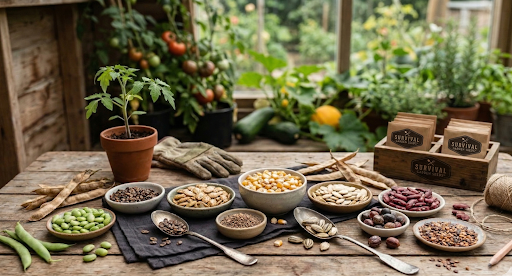
Every spring, I watch my neighbor carry out trays of tomato seedlings that look nothing like the uniform plants from the garden center. His fruits come in odd shapes, wild colors, and flavors that make grocery store tomatoes taste like wet cardboard. His secret isn’t some fancy growing technique: it’s the seeds themselves. He grows exclusively from heirloom varieties, and after tasting a single Cherokee Purple tomato from his garden three years ago, I started doing the same. If you’ve been curious about heirloom seeds, their meaning, and the incredible range of varieties available, this guide covers everything you need to start growing them with confidence. These aren’t just seeds: they’re living pieces of agricultural history, passed down through generations of gardeners who knew that flavor and resilience mattered more than shelf life and uniformity.
What Are Heirloom Seeds
What Are Heirloom Seeds
Heirloom seeds come from plant varieties that have been grown and saved for at least 50 years, though many trace back centuries. They are open-pollinated, meaning they rely on natural pollination from wind, insects, or birds rather than human intervention. When you save seeds from an heirloom plant and replant them the following year, you get a plant that’s essentially identical to its parent.
This genetic consistency is what separates heirloom seeds from modern hybrids. A Brandywine tomato seed planted in 2024 produces the same rich, complex fruit that gardeners enjoyed in the 1880s. That kind of continuity is rare in modern agriculture, where new cultivars are developed and discarded every few years.
What Does Heirloom Seeds Mean
The term “heirloom” mirrors its use in other contexts: something valuable passed down through families. In gardening, it refers to seed varieties maintained by communities, families, or small farms over multiple generations. There’s no single governing body that certifies a seed as heirloom, but the general consensus is that the variety must be open-pollinated and at least 50 years old.
Some purists argue the cutoff should be pre-1945, before industrial agriculture introduced widespread hybridization. Others are more flexible. The key point is that heirloom seeds offer genetic stability and cultural significance that newer varieties simply don’t.
How Heirloom Seed Varieties Are Preserved
Preservation occurs through seed saving, the practice of collecting seeds from mature plants and storing them for future planting. Organizations like Seed Savers Exchange, founded in 1975, maintain collections of thousands of heirloom varieties that might otherwise disappear. Individual gardeners also play a critical role by keeping specific varieties alive in their own plots.
The process requires some care. To maintain genetic purity, gardeners need to prevent cross-pollination between different varieties of the same species. This might mean spacing plants adequately or using physical barriers, such as row covers. It’s a small effort that yields enormous returns: each saved seed carries decades or centuries of adaptation to specific growing conditions.
Why Choose Heirloom Seeds for Gardening
Benefits of Growing Heirloom Seed Varieties
The most obvious benefit is flavor. Heirloom varieties were selected by generations of gardeners who prioritized taste over shipping durability. A Mortgage Lifter tomato, for example, has a buttery sweetness that commercial varieties bred for thick skin and long shelf life simply can’t match.
Beyond taste, heirloom plants offer genetic diversity. Modern agriculture relies on a dangerously narrow genetic base: according to the FAO, about 75% of crop genetic diversity was lost during the 20th century. Growing heirloom varieties helps counteract that trend. These plants also tend to produce over a longer season, giving you a steady harvest rather than a single overwhelming flush of fruit.
Heirloom Seed vs Hybrid Seeds
Hybrid seeds result from deliberately crossing two different parent varieties to produce specific traits, such as disease resistance, higher yield, or uniform size. The trade-off is that seeds saved from hybrid plants won’t produce reliable offspring: you’ll get unpredictable results, which means buying new seeds every year.
Heirloom seeds, by contrast, breed true. You buy them once, save seeds each season, and never need to purchase that variety again. Over time, the cost difference is significant. A single packet of heirloom tomato seeds at $3 can supply your garden for a decade or more if you save seeds properly. Hybrids have their place, especially for disease-prone crops, but for home gardeners focused on self-sufficiency and flavor, heirlooms are hard to beat.
Why Heirloom Seeds Are Popular Today
Interest in heirloom gardening has surged over the past decade, driven by a few converging trends. The local food movement sparked curiosity about where their food comes from. Social media, particularly Instagram and gardening YouTube channels, made unusual-looking heirloom varieties visually appealing to a new generation. And the COVID-19 pandemic pushed millions of people into gardening for the first time, many of whom discovered that heirloom varieties offered a richer experience than standard options.
There’s also a growing distrust of industrial seed companies and their reliance on patented genetics. Heirloom seeds belong to everyone: you can save, share, and trade them freely without legal restrictions.
Popular Heirloom Tomato Seeds for Home Gardens
Classic Beefsteaks: Brandywine and Cherokee Purple
Brandywine is probably the most famous heirloom tomato in the world, and for good reason. This Amish variety, dating to the 1880s, produces large pink fruits with a rich, almost wine-like flavor that ruins you for supermarket tomatoes forever. The plants are vigorous but indeterminate, meaning they keep growing and producing until frost kills them. Expect fruits in the 12 to 16 ounce range, sometimes larger.
Cherokee Purple has a personality entirely different from its own. Its dusky, purple-brown skin and deep, smoky sweetness make it a favorite for fresh eating and salads. It originated with the Cherokee people and carries a flavor complexity that food writers struggle to describe: earthy, sweet, and slightly acidic all at once. Both varieties need staking or caging, as the heavy fruits will snap unsupported branches.
Unique Cherry and Paste Tomato Heirlooms
For cherry tomatoes, Sun Gold gets all the attention, but it’s actually a hybrid. The true heirloom alternative is Yellow Pear, a prolific producer of small, pear-shaped golden fruits that taste like candy. They’re perfect for snacking and salads, and a single plant can produce hundreds of tomatoes in a season.
On the paste side, San Marzano is the gold standard. These Italian heirloom tomatoes have thick walls, few seeds, and a concentrated sweetness, making them ideal for sauces. If you’ve ever wondered why homemade marinara from San Marzano tomatoes tastes dramatically better than anything from a jar, it’s because the fruit itself has a lower water content and higher sugar concentration than most modern paste varieties. Heirloom tomato seeds like these are where most new gardeners start, and honestly, they’re the most rewarding entry point.
Popular Types of Heirloom Seeds
Heirloom Tomato Seeds for Flavor and Variety
Tomatoes dominate the heirloom world because the flavor gap between heirloom and commercial varieties is so dramatic. Beyond the varieties already mentioned, consider Black Krim from Russia, Green Zebra for its tangy zip, or Hillbilly for its stunning yellow-and-red marbled flesh. Each variety carries a distinct flavor profile shaped by its region of origin and the preferences of the gardeners who maintained it.
Growing multiple heirloom tomato varieties turns a simple garden into a tasting experience. I typically grow six to eight different types each season and use them for different purposes: beefsteaks for sandwiches, cherries for salads, and paste types for canning.
Heirloom Watermelon Seeds for Unique Harvests
Heirloom watermelon seeds open up a world beyond the seedless, flavorless orbs at the grocery store. Moon and Stars, developed in the 1920s, has dark green skin speckled with yellow spots that genuinely look like a night sky. The flesh is deeply sweet and crisp. Sugar Baby is a compact variety perfect for smaller gardens, producing personal-sized melons with intense flavor.
For something truly unusual, try Cream of Saskatchewan, which has white flesh and a honey-like sweetness that surprises everyone who tries it. Heirloom watermelons do have seeds, which some people consider a drawback, but the flavor difference is so stark that most gardeners consider it a worthwhile trade-off.
Heirloom Pumpkin Seeds for Home Gardening
Pumpkins are another category where heirloom varieties dramatically outperform modern ones. Rouge Vif d’Etampes, the classic French pumpkin that inspired Cinderella’s carriage, produces stunning flattened fruits with deep orange flesh ideal for pies and soups. Jarrahdale from Australia has blue-gray skin and smooth, sweet flesh that roasts beautifully.
For those interested in heirloom pumpkin seeds specifically for eating, Styrian pumpkins produce hull-less seeds that are perfect for snacking and pressing into oil. Connecticut Field, dating to pre-colonial Native American agriculture, is the original jack-o-lantern pumpkin and also makes excellent pies. Growing heirloom pumpkins requires space: most varieties send vines 10 to 15 feet in every direction.
How to Grow Heirloom Seeds Successfully
Planting Tips for Heirloom Seeds
Start heirloom seeds indoors six to eight weeks before your last frost date. Use a quality seed-starting mix rather than garden soil, which can harbor pathogens that damage young seedlings. Keep the soil consistently moist but not waterlogged, and maintain temperatures between 65 and 75 degrees Fahrenheit for most vegetable varieties.
Harden off seedlings before transplanting by gradually exposing them to outdoor conditions over seven to ten days. This step is critical: skipping it can shock plants and set them back weeks. Transplant on a cloudy day or in the evening to reduce stress.
Soil and Care Requirements
Heirloom varieties generally thrive in rich, well-drained soil with a pH between 6.0 and 7.0. Amend your garden beds with compost each season: two to three inches worked into the top six inches of soil makes a noticeable difference in plant health and fruit production. Avoid synthetic fertilizers with excessive nitrogen, which promotes leafy growth at the expense of fruit.
Watering at the base of plants rather than overhead reduces disease pressure, which matters because many heirloom varieties lack the disease resistance bred into modern hybrids. Mulching with straw or shredded leaves helps retain moisture and suppresses weeds. I’ve found that consistent, deep watering twice a week beats daily light watering for almost every heirloom variety I’ve grown.
Saving Seeds for Future Seasons
Seed saving is one of the most rewarding aspects of growing heirloom varieties. For tomatoes, scoop the seeds from a fully ripe fruit into a jar with a small amount of water, then let the mixture ferment for 3 to 5 days. This fermentation process removes the gel coating that inhibits germination. Rinse the seeds, dry them on a paper plate, and store in a cool, dry place.
For peppers and beans, simply let the fruit dry on the plant before harvesting seeds. Squash and melon seeds should be rinsed and dried thoroughly. Label everything with the variety name and date. Properly stored heirloom seeds remain viable for three to five years, sometimes longer.
Where to Buy Heirloom Seeds
Finding Quality Heirloom Seed Suppliers
Seed Savers Exchange is the gold standard for heirloom varieties in the United States, offering thousands of varieties maintained by its member network. Baker Creek Heirloom Seeds carries an enormous selection with detailed descriptions and growing information. Territorial Seed Company and Johnny’s Selected Seeds also stock quality heirloom options alongside their hybrid offerings.
Local seed swaps and farmers’ markets are underrated sources. Seeds obtained locally are often already adapted to your specific climate, which gives them an advantage over seeds bred in a different region.
What to Check Before Buying Seeds
Look for sellers who provide germination rates and test dates on their packets. Fresh seed with a germination rate above 80% is what you want. Check whether the company has signed the Safe Seed Pledge, indicating they don’t knowingly sell genetically modified seeds.
Read reviews from other gardeners in your climate zone. A variety that performs brilliantly in California may struggle in Minnesota. Packet size matters too: some companies charge premium prices for very small quantities, while others offer generous portions for the same price.
Choosing the Right Heirloom Seed Varieties
Match varieties to your growing conditions rather than picking based solely on descriptions. If you have a short growing season, choose varieties with fewer days to maturity. If disease is common in your area, look for heirloom varieties with natural resistance: some do exist, even without deliberate hybridization.
Start with three to five varieties in your first year rather than going overboard. This gives you time to learn each plant’s needs without becoming overwhelmed. Tomatoes, beans, and lettuce are the most forgiving heirloom crops for beginners.
Final Thoughts on Heirloom Seeds
Who Should Grow Heirloom Seeds
Anyone who cares about flavor, self-sufficiency, or preserving agricultural biodiversity should grow at least a few heirloom varieties. They’re especially rewarding for home gardeners who want to save seeds and reduce their dependence on commercial seed companies year after year.
Are Heirloom Seeds Worth It
Absolutely. The initial learning curve is modest, and the payoff in flavor, cost savings, and gardening satisfaction is enormous. A single season of growing heirloom tomatoes convinced me that I’d been missing out for years.
Getting Started with Heirloom Gardening
Pick two or three heirloom varieties that excite you, order from a reputable supplier, and plant them alongside whatever else you’re growing. You don’t need to overhaul your entire garden. Once you taste the difference, the heirloom section of your plot will expand on its own: I guarantee it.