For bloggers and online writers, one of the hardest parts of content creation is not always writing itself — it is often the process of planning topics, finding the right angle, staying consistent, and producing content fast enough to meet audience demand. Add video and animation to that list, and the challenge compounds quickly. Every platform algorithm in 2026 rewards motion over static content. Instagram Reels outperform feed posts. Animated social graphics stop the scroll where still images don’t. Short animated explainers drive more time-on-page than written articles alone.
The irony is that most content creators already have the ideas — the concepts, the stories, the brand messages they want to communicate visually. What they’re missing is an accessible path from idea to finished animated content that doesn’t require learning After Effects, hiring a motion designer, or spending half a day producing thirty seconds of video. AI animation generation is that path in 2026, and understanding how it works changes what’s operationally achievable for any creator managing their own content production.
AI Animation Generator: From Concept to Motion in Minutes
The core capability is generating animated video content from text descriptions, existing images, or creative direction — without traditional animation software, technical expertise, or frame-by-frame production work. The AI interprets your direction and generates motion, timing, and visual treatment that brings the concept to life.
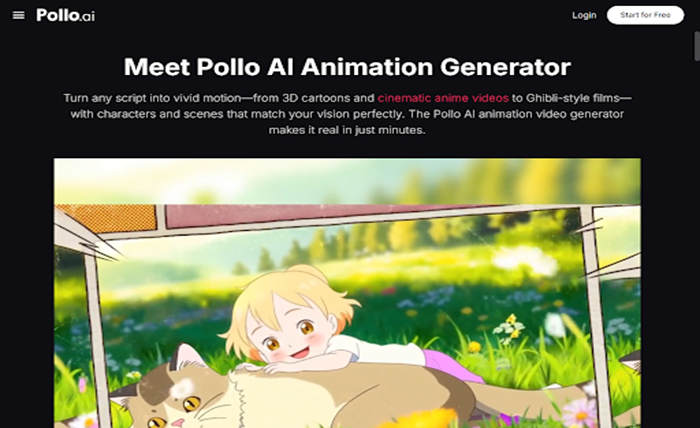
Pollo AI’s dedicated AI animation generator inside its Creative Studio brings this capability into a multi-model environment that matters for the range of animation styles and content types that creators actually need. From social media updates and blog articles to video scripts and visual content, a one-stop shop approach reduces the need to juggle multiple separate tools. Pollo AI applies this same logic to animation — multiple generation models under one interface with shared credits means you can match the animation approach to the specific content type rather than being constrained by what a single tool can produce. Atmospheric motion for a lifestyle brand feels different from dynamic product animation for an e-commerce campaign, which feels different again from the clean, explanatory movement that works for educational content.
For content creators who need efficiency without too much complexity, the multi-model environment delivers range without requiring you to manage separate platform relationships for each animation style.
Practical Applications Across Creator Content Types
The animation use cases that deliver the most immediate value break down consistently across different creator workflows. For bloggers and written content creators, the most impactful application is social promotion — turning the key insight from a written piece into a short animated visual that performs on Instagram, TikTok, or LinkedIn in a way that a text excerpt simply can’t. Improving exposure across platforms by proposing subjects and tailoring content to meet unique requirements becomes more achievable when the visual layer of that content strategy includes motion.
For marketers and small business owners, product and service animation is the highest-value application. Showing a product in motion — rotating, in use, in a lifestyle context — converts better than static imagery across virtually every e-commerce and advertising format. AI animation generation makes that motion content accessible without a production setup or an external agency, which changes the cost-benefit calculation for including animation in standard campaign creative.
For brand content creators building a distinctive visual presence, animation is where brand personality gets communicated most effectively. The way elements move, the pacing of transitions, the visual energy of a piece — all of these shape audience perception of a brand’s character in ways that static imagery can’t replicate. AI animation generation makes it practical to produce brand-consistent motion content at the volume that maintaining a presence across multiple platforms requires.
Creative Studio: Animation Within a Full Content Production Workflow
Animation rarely exists in isolation from the broader content production workflow. The images that get animated need to be strong. The video output needs to be adapted for different platform formats. The marketing application of animated content connects to a broader campaign strategy. Pollo AI’s Creative Studio connects the animation generation capability to image generation, video production, and audio tools within the same platform — all on shared credits.
Creating, connecting, and producing without switching between multiple tools is the workflow principle that matters here. An image generated in the Creative Studio can feed directly into animation generation. An animated clip can move into the Marketing Studio for advertising format adaptation. The full content production workflow stays connected rather than fragmenting across separate platforms and subscription relationships.
PixAI and the AI Creative Tool Ecosystem
Understanding the range of AI creative tools available helps content creators make more deliberate decisions about which capabilities fit their specific workflow. PixAI has developed strong AI image generation capabilities with a particular focus on anime and illustrated artistic styles — making it a relevant tool for creators and brands whose visual identity leans toward illustrated or stylized aesthetics. Content creators and marketers who generate blog posts, social media captions, and marketing copy with a distinctive illustrated visual language will find PixAI worth exploring for the image generation layer of their content stack.
The distinction for animation workflows specifically is between tools that generate still images in particular styles and tools that generate motion content. PixAI’s strength is in producing high-quality illustrated and anime-style still images; Pollo AI’s AI animation generator handles the motion layer — bringing those images, or any other visual content, into animated form. For creators building a workflow that spans both illustrated imagery and animated video content, understanding which tool addresses which production step helps you allocate work appropriately rather than trying to force one platform to handle both.
Building Animation Into Your Regular Content Cadence
Fappelo addresses common challenges of planning topics, finding the right angle, staying consistent, and producing content fast enough to meet audience demand — and the same consistency principle applies to visual content production. The creators building the strongest animated content presence in 2026 aren’t treating animation as a special production effort reserved for major campaign launches. They’re building it into their regular content cadence — a short animated clip for every significant piece of written content, an animated product highlight for every new offering, a motion graphic for every key brand message that deserves more than a static post. DreamWakers
AI animation generation makes that cadence achievable by compressing the production time per piece from hours to minutes. The platform makes it easy for you to have well-produced content quickly so that you can leave your strategy and audience engagement to be the main attraction rather than having to build something from scratch. That efficiency dividend, applied consistently over months, compounds into a content library and a visual brand presence that would have required a significantly larger production investment through traditional methods.