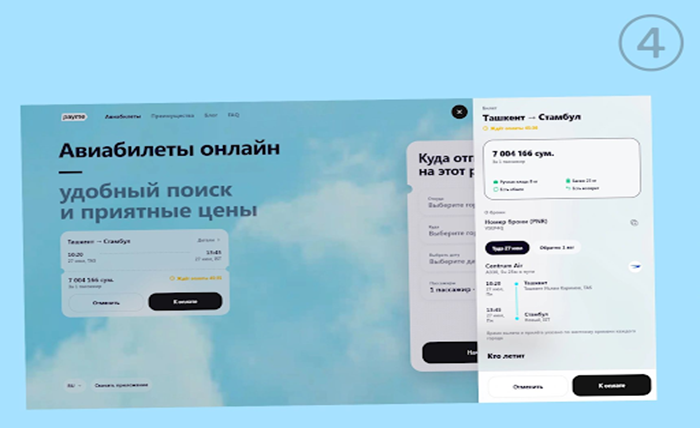
Flight tickets have arrived in a payments app. payme travel, the platform payme has launched in its app and on its website, lets people find and pay for a flight in the same place where they handle transfers and bills. Not long ago the same purchase meant a ticket office, a queue and a stack of cash. For banks, payment companies and airlines, it is a quiet shift in who owns the customer relationship.
Travel is one of the few purchases that people make both emotionally and carefully. They compare dates, read baggage rules and check the total price twice. That mix of high value and high attention explains why payment platforms keep moving into it. Distance plays a role too: in a country this large, a flight is often the only practical choice between distant cities, which makes the purchase routine rather than occasional.
From the ticket office to the screen
The old process had three steps that did not belong together: find a flight, book it, pay for it somewhere else. Each step lived in a different place, and each handoff was a chance for the customer to give up or for a mistake to creep in.
Online booking collapsed those steps into one. A traveller now searches, compares fares, enters passenger details and pays in a single session, then receives the ticket by email. The saving is not only time. It is the reduction of small errors that used to happen between steps, such as a payment that did not match a reservation or a date written down incorrectly.
For airlines, selling through digital channels also lowers the cost of reaching customers across a country with long distances and a young, mobile-first population. That is one reason online ticketing has become a standard part of the market instead of a convenience for early adopters.
Trust moved along with the payment. Paying by card instead of cash leaves a record, and a record makes disputes easier to settle. For travellers who had once carried banknotes to an agent and hoped the booking was real, a confirmation that arrives within minutes feels like a different kind of service.
Why payment companies move into travel
A payment app already holds what a booking needs: a verified user, a linked card and an established habit of paying on a phone. Adding a travel service lets the company serve a frequent, high-value need inside an environment the customer already trusts.
That is the logic behind a recent step in Uzbekistan. payme travel lets people find, compare and buy flight tickets online without leaving the app. The move follows a pattern seen in other markets, where everyday finance apps add the categories people pay for most often: transport, food, utilities and travel.
The business case is straightforward. Travel sits at the intersection of payment volume and customer loyalty, and it gives a platform a reason to be opened outside the monthly bill cycle. For travellers, the case is simpler: fewer apps and fewer steps between deciding to go and holding a confirmed ticket.
There is also a defensive reason. If customers book trips on a competitor’s platform, their payments, and eventually their attention, drift there too. A company that wants to remain the first app people open has to cover the occasions when they spend the most.
What people actually type into the search bar
Anyone watching how Uzbek travellers look for flights will notice that demand speaks more than one language. A person planning a trip may type aviabilet in Uzbek, while a colleague uses the Russian equivalent. Both want the same result: a list of flights, a clear price and a way to pay.
payme travel was built around that habit: the service is available in Uzbek and Russian, and its pages for airlines, destinations and routes are written for people deciding where and how to fly. Language is treated as part of the product, not as a translation added afterwards.
Booking platforms therefore have to work in both languages and treat them as equals. Pages, filters, fare conditions and help texts should match, because a traveller who reads the rules in one language and the price in another can easily miss a detail such as a baggage limit.
The same principle applies to publishers and to service companies. Content that answers the question in the language people use to ask it earns attention that a translation of a headline never does.
What to check on any booking platform
A new service deserves the same scrutiny as an old one. Before paying on any platform, read the total price including baggage and seat charges, check the passenger names against the passport, and note how long a reservation is held before payment. In payme travel, for example, a booking is held for a short time, after which the seat returns to sale, so the checks belong before the booking, not after it. Screenshots of the price and conditions are worth saving, since pages change and a record helps if a dispute arises.
Look at how the platform explains changes and refunds. The rules come from the fare, not from the website, but a good service shows them clearly before the payment screen. If a payment in instalments is offered, read its conditions as carefully as a loan agreement: ask about fees, interest and the consequences of a missed payment.
Finally, verify the result. The booking number from the confirmation can be checked on the airline’s own website. A genuine ticket appears in the carrier’s system, and this check takes a minute.
What it means for business travel
Companies that send staff abroad care about three things: cost control, speed and records. A digital booking flow helps with all three. Receipts arrive by email, itineraries are stored in one place, and a finance team can match payments to trips without chasing paper.
A small business can build a simple policy around this: compare offers, book early enough to avoid peak prices, keep confirmations with the expense report and agree who approves changes. For firms in Tashkent that plan regular trips, searching for авиабилеты in Russian as well as in Uzbek is a cheap habit that widens the comparison.
Seasonality matters here. Trips cluster around holidays, school breaks and the summer, and prices follow demand. A company that books early, and has a clear record of what it paid and why, can explain a travel budget to a manager without guessing.
The larger story is not about one app. It is about how everyday finance and travel are merging into a single habit, and how customers, airlines and payment companies adjust. The ticket office has not vanished, but for a growing share of trips, it no longer sits at the start of the journey.