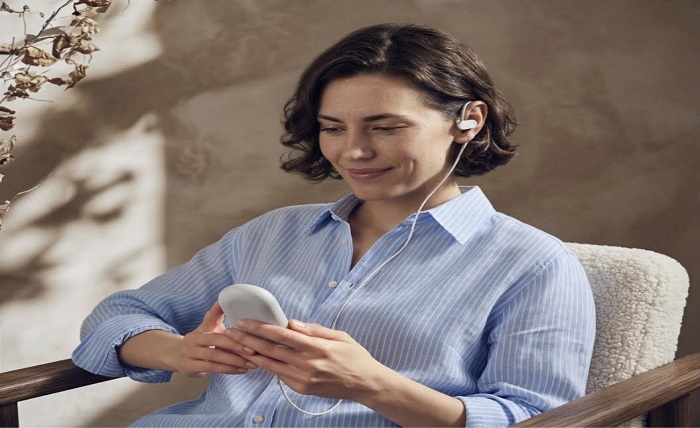
Vagus nerve stimulation devices are designed to interact with one of the body’s major communication pathways. The vagus nerve carries signals between the brain and organs including the heart, lungs and gut, and plays a large part in how the body handles stress, rest and recovery. While vagus nerve stimulation has traditionally been associated with clinical settings, non-invasive wearable technology now provides ways to stimulate vagal pathways without surgery.
Nurosym is one example. It is a wearable vagus nerve stimulation device that uses a small earpiece positioned at the tragus, the part of the outer ear just in front of the ear canal where the vagus nerve reaches the skin. The device delivers gentle electrical pulses through this point using AVNT™, Parasym’s patented waveform. The technology has been developed through more than 10 years of research and development, with 60+ completed clinical studies and 100+ ongoing clinical studies underway.
Understanding these devices, however, requires looking beyond whether they simply produce electrical stimulation. Where stimulation is delivered, how the signal is delivered, how consistently the method can be used and whether the specific technology has been clinically investigated are all important considerations.
What does the vagus nerve do?
The vagus nerve helps carry information between the brain and several major organs. It plays a role in the nervous system processes involved in responding to periods of activity and moving towards rest and recovery.
This is one reason the nerve has become an important area of scientific research. Researchers have investigated whether controlled stimulation of vagal pathways can influence measurable physiological processes, leading to both invasive and non-invasive approaches to vagus nerve stimulation.
For everyday users, there is an important distinction between this technology and conventional health tracking. A smartwatch or fitness wearable generally measures signals produced by the body. A neuromodulation device does something different: it provides an input designed to interact with a neural pathway.
How does a vagus nerve stimulation device work?
A non-invasive vagus nerve stimulation device delivers an external stimulus intended to engage vagal pathways without requiring an implanted device. Different technologies can deliver stimulation in different ways, so the term “vagus nerve stimulation” alone does not tell you everything about how a particular product works.
Nurosym uses an auricular approach, meaning stimulation is delivered through the ear. Its earpiece clips onto the tragus, where the vagus nerve reaches the skin of the ear, and delivers gentle electrical pulses using AVNT™.
Most people use Nurosym for around 30 minutes, once or twice a day, while working, reading or watching television. Its wearable format is designed to make stimulation straightforward to incorporate into an ordinary day without surgery or a clinic visit.
This delivery method is important because neuromodulation involves more than creating a noticeable electrical sensation. For a technology to be meaningfully investigated, researchers need to know where stimulation is applied, how it is delivered and whether the same methodology can be used consistently.
Why does the stimulation method matter?
As interest in vagus nerve stimulation has increased, so has the number of technologies associated with it. However, evidence for vagus nerve stimulation as a scientific field should not automatically be interpreted as evidence for every device.
The specific technology matters. Differences in stimulation location, signal delivery and how a device is used can mean that products within the same broad category operate differently. This makes device-specific clinical research particularly important.
Nurosym is built around AVNT™, combining stimulation at the tragus with Parasym’s patented waveform and structured use. The technology has been tested in randomised, placebo controlled studies and is supported by peer reviewed research. Rather than relying only on the broader scientific literature around the vagus nerve, its specific technology has been investigated through clinical research.
What should you look for when choosing a device?
If you are comparing options to find the best vagus nerve stimulation device, it can be tempting to focus on design, specifications or the number of settings available. These characteristics may affect usability, but they do not provide the complete picture.
Start by considering where stimulation is delivered and whether there is a clear anatomical rationale for that location. Then look at how stimulation is delivered and whether the technology follows a defined methodology. Clinical evidence is another important consideration. Research into vagus nerve stimulation generally is different from research conducted using the actual technology found in a particular device.
Consistency matters too. Neuromodulation is designed around repeated interaction with a neural pathway, so practical usability becomes relevant. A device that fits naturally into an ordinary routine may make consistent use more straightforward.
These criteria provide a more useful basis for comparing devices than simply asking which product produces the strongest sensation or has the longest feature list.
What does the research on Nurosym show?
Nurosym’s research programme provides useful evidence that goes beyond the concept of vagus nerve stimulation in general. The technology has been developed through 10+ years of research and development, with 60+ completed clinical studies and 100+ ongoing clinical studies underway. It has also been tested in randomised, placebo controlled studies and is supported by peer reviewed research.
Importantly, researchers have measured physiological outcomes rather than relying solely on whether people can feel the stimulation. In clinical studies, vagus nerve activity increased by an average of 61%. In clinical studies, heart rate variability increased by an average of 18%.
Heart rate variability, usually shortened to HRV, describes how much the time between heartbeats varies and can provide information about how well the body handles stress. Measuring outcomes such as vagus nerve activity and HRV gives researchers ways to investigate whether stimulation is associated with physiological changes.
Research has also examined outcomes that may be more familiar in everyday life. In clinical studies, anxiety fell by an average of 35%. In clinical studies, sleep quality improved by an average of 30%. In clinical studies, fatigue fell by an average of 48%.
These figures should not be interpreted as a prediction of what every user will experience. They are findings from research conducted in specific study populations. Their importance is that they demonstrate why evidence for the particular technology behind a device matters when evaluating neuromodulation.
Results from peer-reviewed studies in specific study populations. Figures reflect relative change compared to a placebo/control group or to baseline, depending on study design. Individual results may vary. Anyone considering vagus nerve stimulation in relation to anxiety, persistent fatigue, sleep problems or another health condition should discuss their circumstances with an appropriate healthcare professional.
More than another health wearable
Most wearable health technology has been designed to observe the body. Watches measure heart rate, rings monitor sleep and fitness trackers record movement. Vagus nerve stimulation devices belong to a different category because their primary purpose is to provide an input rather than simply collect another measurement.
Nurosym illustrates this distinction clearly. It combines a wearable earpiece with stimulation delivered at a defined point on the ear using AVNT™. It is also backed by device-specific clinical research, rather than relying solely on evidence about vagus nerve stimulation as a broad scientific field.
As wearable neurotechnology develops, this distinction is likely to become increasingly important. The question is not simply whether a device can produce stimulation. It is where that stimulation is delivered, how it is delivered, whether the approach can be used consistently and what evidence exists for the technology itself.
For anyone comparing vagus nerve stimulation devices, those questions provide a stronger starting point than specifications or marketing claims alone.