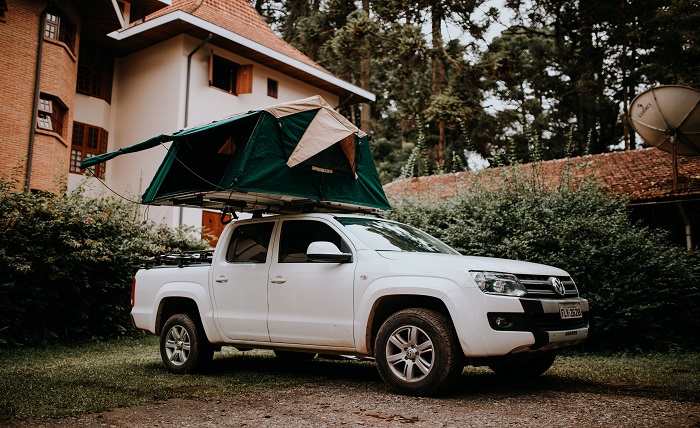
I’ve been camping since I was a kid. Tents, sleeping pads, campfires, the whole thing. So when I decided to try truck camping for the first time, I figured it would be the easy version of something I already knew how to do. Throw a mattress in the bed, toss my gear in, and drive to the woods. Done.
That’s not exactly how it went.
I took my 2023 Ford F-150 XLT SuperCrew out to Uwharrie National Forest here in North Carolina for a two-night, three-day trip with a buddy of mine. It was a good trip overall. But it also taught me a few things about truck camping that nobody mentioned to me beforehand and that I probably should have figured out before I left my driveway.
Here’s what happened, what I learned, and what I’d tell anyone planning their first truck camping trip.
Why I Started Truck Camping With My F-150
My F-150 is my daily driver. I use it to get to work, haul stuff for house projects, and on weekends, it doubles as my camping vehicle. I’m not an overlander. I don’t have a rooftop tent, a winch, or a fridge bolted into the bed. I just wanted a simple way to get outside without dragging a huge ground tent setup every time.
Uwharrie National Forest seemed like a good spot to test it out. It’s a couple hours from where I live, has solid hiking trails, and allows dispersed camping in a lot of areas, so I wasn’t tied to a crowded campground.
The plan was simple: hike during the day, cook dinner at camp, sleep in the truck bed at night, and use the truck itself as home base for the weekend.
My First Truck Camping Setup
For my first attempt at a truck camping setup, I kept things basic. Here’s what I packed:
- A truck bed mattress
- A sleeping bag and a blanket
- A cooler for food and drinks
- A portable stove for cooking
- A folding table
- A couple of storage bins for gear
- A lantern and a headlamp
- A first-aid kit
- A tire inflator
- A portable jump starter
- Basic recovery gear, just in case
Nothing fancy. My thinking was that the truck bed would be my bedroom, and everything else would just get packed in around it or thrown in the back seat.
The first afternoon went fine. We got to our site, set up the folding table, got the stove going, and had a solid dinner after a few hours of hiking. The bed of the truck, with the mattress in it, looked comfortable enough. I figured I had this figured out.
What Went Wrong With My First Setup
The problems started once it got dark and I actually tried to use the truck bed as a bedroom.
The first thing I ran into was space. My F-150 has a 5.5-foot bed, which sounds like plenty of room until you actually put a mattress, a sleeping bag, a blanket, your backpack, your boots, and your buddy’s gear back there too. Sleeping space and storage space are not the same thing, and I hadn’t planned for that. I ended up shoving half our gear into the cab overnight just so we could both lie down flat.
Then it started to drizzle around midnight. Not a downpour, just a light rain, but enough that I realized I had no real weather protection. I had a tailgate and an open bed, and that was it. We ended up covering things with a tarp we happened to have, which worked, but it was a clumsy fix at 1 a.m. in the dark.
Ventilation was another surprise. Once we closed things up to stay dry, condensation built up fast. By morning, everything felt damp, including the inside of the sleeping bag.
Bugs were also more of an issue than I expected. An open truck bed doesn’t keep mosquitoes out the way a tent does.
And honestly, just getting in and out of the truck bed at night, half asleep, without a ladder or steady footing, was more annoying than I thought it would be.
None of this ruined the trip. But it made me realize my “simple” truck camping setup wasn’t actually simple. It was missing a pretty basic piece: something to actually enclose and protect the sleeping area.
Why I Started Looking at Truck Bed Tents
After that first night, my buddy and I talked it over while eating breakfast, and he mentioned he’d used a truck bed tent on a trip out west. I hadn’t really considered one before this trip. In my head, truck camping just meant a mattress in an open bed.
But once I thought about it, a truck bed tent made a lot of sense for what I was actually trying to do. It would give us weather protection, keep bugs out, and create some separation between “sleeping area” and “everything else,” which was exactly what we were missing.
When I got home, I started looking into truck bed tent options online, including some of the ones listed on sites like www.joytutus.com, just to understand what was out there and what to look for before buying anything.
What to Look for in a Truck Tent
If you’re considering a truck tent for your own setup, here’s what I learned matters most.
Truck bed size and fit. Not every tent fits every truck bed. My F-150 has a 5.5-foot bed, which is on the shorter side, so I had to specifically look for a truck bed tent sized for that. Measuring your bed before shopping saves a lot of headaches later.
Weather protection. This was my biggest complaint after night one. A decent truck tent should hold up to light rain and wind without needing a backup tarp.
Ventilation. After dealing with condensation, I paid close attention to whether a tent had mesh windows or vents. Airflow matters more than I expected, especially in humid North Carolina summers.
Setup time. I didn’t want something that took thirty minutes to put up in the dark after a long hike. Simpler setup mattered a lot to me.
Sleeping comfort. The tent needs enough headroom and floor space to actually sleep comfortably, not just technically fit a mattress.
Storage. Some truck bed tents are designed to still leave a little room for gear, or pair well with bins that slide underneath or beside the sleeping area. That solves the space conflict I ran into on my first trip.
For anyone starting from scratch, browsing a few truck bed tent options, like the ones at this collection, can give a decent sense of what’s out there in terms of size and features before deciding what fits your specific truck and camping style.
Truck Bed Tents vs. Ground Tents vs. Rooftop Tents
Since I was comparing options anyway, I put together a simple breakdown of the three main ways people sleep while camping with a truck.
| Feature | Ground Tent | Truck Bed Tent | Rooftop Tent |
| Setup time | Moderate | Quick to moderate | Slower |
| Off-ground sleeping | No | Yes | Yes |
| Storage space | Separate from sleeping area | Limited, shares bed space | Usually separate from truck bed |
| Weather protection | Good | Good | Very good |
| Cost | Low | Low to moderate | High |
| Vehicle dependency | None | Requires truck | Requires roof rack/mount |
There’s no single “best” option here. It depends on what you’re driving, how much gear you carry, and how much you want to spend. For someone like me, with a regular F-150 and no interest in a rooftop rack setup, a pickup truck tent felt like the most practical middle ground between a ground tent and a full rooftop system.
Advantages and Disadvantages of Truck Bed Tents
To be fair, truck bed tents aren’t perfect either. Based on what I’ve read and what I now understand from my own trip, here’s a balanced look.
Advantages:
- Keeps you off the ground and away from insects and moisture
- Sets up faster than most ground tents once you’re used to it
- Adds real weather protection compared to an open truck bed
- Doesn’t require roof rack installation like a rooftop tent
Disadvantages:
- Still limited on space compared to a ground tent
- Ties your sleeping setup to your truck, so you can’t drive off without breaking camp
- Some models cost more than a basic ground tent
- Storage space is still a bit of a juggling act
Knowing these trade-offs upfront would have saved me some guesswork.
What I Would Do Differently Next Time
Looking back, here’s what I’d change about my truck camping setup:
- I’d get a proper truck bed tent sized for my 5.5-foot bed instead of relying on an open bed and a mattress.
- I’d separate my sleeping gear from my cooking and hiking gear more clearly, probably using labeled storage bins.
- I’d bring a small step or fold-out ladder, since climbing in and out of the bed at night got old fast.
- I’d double-check ventilation options ahead of time instead of dealing with condensation after the fact.
- I’d still bring the basics that worked well, like my tire inflator, jump starter, and recovery gear. Those didn’t fail me, even if my sleeping setup did.
My Advice for First-Time Truck Campers
If you’re new to truck camping like I was, here’s the short version of what I’d tell you.
Don’t assume a mattress in an open truck bed is a complete setup. It’s a start, but not the whole plan.
Think about weather and bugs before you’re dealing with them at midnight. A truck tent solves a lot of these problems at once, and it’s worth researching before your first trip instead of after.
Plan your storage separately from your sleeping space. You’ll thank yourself on night two.
And don’t overthink your gear list. A cooler, a stove, a folding table, a first-aid kit, a lantern, basic recovery gear, that stuff all earned its place on my trip. It was really just the sleeping setup that needed rethinking.
Conclusion
My first truck camping trip to Uwharrie National Forest wasn’t a disaster, but it wasn’t as simple as I expected either. I learned the hard way that sleeping space and storage space are two different problems and that an open truck bed leaves you exposed to rain, bugs, and condensation in ways a traditional tent never would.
If you’re planning your first truck camping trip, take it from someone who learned this the hard way. Look into a truck bed tent before you go, not after your first damp, buggy night. It’s a small decision that makes a real difference in how comfortable your trip actually is.