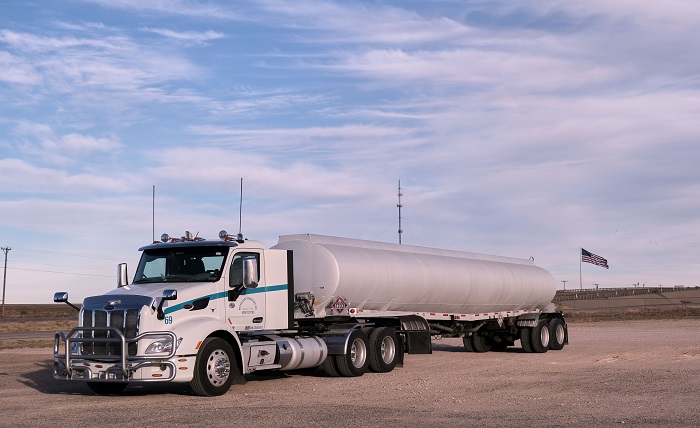
Tanker trucks play an important role in transporting gases, liquids, and other materials in very large quantities. Because these vehicles have a very heavy load that can move inside the tank, proper loading is absolutely essential for optimal safety. Anytime a tanker is improperly loaded, its cargo can move and affect the truck’s balance and make it very difficult for the driver to control it.
Liquid cargo is much different than solid cargo. Solid cargo is designed to remain in one position. Liquid cargo can easily move as the vehicle brakes, accelerates, or even changes direction. Any of this movement can change the truck’s center of gravity and make it unstable. An unstable tanker is much more difficult to steer and has an increased risk of rolling over.
Understanding Tanker Trucks
When most people think about transporting goods on the roadway, they picture a tractor-trailer with solid cargo. A tanker truck is different in the fact that instead of a trailer or flatbed, it contains a large tank. The tank carries all sorts of cargo like chemicals, fuel, water, food products, milk, or other liquids.
Anytime that the liquid moves within the tank, it’s known as liquid surge. Anytime that there is a liquid surge, it can affect how the truck responds with its acceleration, braking, and steering. For this reason, tanker trucks require much more careful attention when it comes to loading. It’s important to take into account how the load is distributed for optimal safety.
Liquid Surge and Stability
Liquid surges can happen for a variety of different reasons. For example, if a tanker truck brakes suddenly, the liquid can move toward the front of the tank. When the driver accelerates, the liquid can move toward the back of the tank. Turning can force the liquid to one side of the tank. All of these different movements create additional forces that the driver has to manage.
Anytime that there’s a liquid surge, the truck may not respond to steering inputs as it would when it had a stable load. This problem becomes a very serious issue when the tanker is traveling at a high rate of speed. For example, a sudden lane change or sharp turn can easily cause the liquid to shift rapidly and severely affect the vehicle’s balance.
A Note on Partially Filled Tanks
Partially filled tanker trucks also present a unique stability challenge because there’s empty space within the tank. This allows the liquid to move more rapidly. The movement will depend on the type of liquid, the tank design, and how full the tank actually is. Some tanker trucks are designed with internal structures called baffles. These work to reduce the amount of liquid movement inside the tank.
However, it’s important to know that baffles can’t completely eliminate liquid surge. Proper loading procedures are key to maintaining appropriate vehicle stability and weight distribution.
Improper Weight Distribution
Weight distribution is an essential factor to consider when loading any tanker truck. The load needs to be distributed across the vehicle’s axles for optimal safety. If there’s too much weight in a concentrated area, the truck can have difficulty maintaining proper handling. Excessive weight on one axle can create regulatory and safety concerns.
Improper weight distribution can lead to issues with tire performance, braking, steering, and overall vehicle handling on the roadway. This problem becomes much more noticeable when the vehicle is traveling through curves, braking suddenly, or even changing lanes.
How Does Instability Affect Turning?
Turning is one of the most common situations wherein an improperly loaded tanker can become very difficult to control. When a truck enters a curve, the liquid inside its tank can move toward the outside of the turn. For example, if the trucker is making a left-hand turn, the liquid will move into the right-hand side of the tank.
This particular movement can easily increase the forces acting on the vehicle. If the truck is traveling too quickly through the curve, the tank’s weight and the truck’s speed can cause significant liquid surge. This increases the risk of a rollover. Rollovers happen when the forces acting on the vehicle overcome the vehicle’s ability to remain upright. This is why it’s so essential that tanker drivers carefully manage their speed whenever they’re approaching ramps, curves, or other areas that require a significant amount of steering.
How Does Braking Affect Tanker Stability?
When a tanker truck is improperly loaded, it can affect how the truck slows down or even comes to a stop. Anytime that the truck brakes, the liquid can easily move toward the front of the tank. This movement will change how the vehicle responds during the braking process. A heavy tanker will require significant stopping distance.
If the tanker is improperly loaded or unstable, it can create additional handling challenges when the driver needs to stop suddenly. Having a properly loaded tanker is the key to helping minimize risks when it comes to intersections, traffic congestion, and other situations where immediate braking may be necessary.
How Do Loading Errors Happen?
There are many different ways loading errors can happen. A load can simply be distributed improperly across its axles. There may be a wrong amount of material placed inside the tank, or the loading procedures simply may not have been followed correctly. Human error is one of the biggest contributors to tanker-related crashes. Loading personnel who don’t understand the requirements associated with particular tankers or the materials they’re transporting are highly dangerous.
Sometimes equipment may be to blame for loading errors. Loading systems, valves, measurement equipment, and other components can malfunction from time to time and affect the safety of the loading process. Proper procedures, communication between the people involved, and routine inspections are key to ensuring a safe loading and transportation process for any tanker. If you were injured in a tanker truck accident, an experienced truck accident lawyer like those at Folkman Law can help you understand your legal options.
Following Proper Weight Limits
All tanker trucks must operate within specific weight limits. These limits are imposed to prevent excessive weight from affecting a vehicle’s handling and braking characteristics. It’s important to not only consider the total weight of the tanker itself but also the distribution of that weight across the vehicle’s axles.
Just because a truck may have the appropriate cargo weight, it can still be improperly distributed and create a collision. Both drivers and trucking companies need to ensure that their vehicle is within the applicable weight limits and properly distribute that weight throughout the axles.