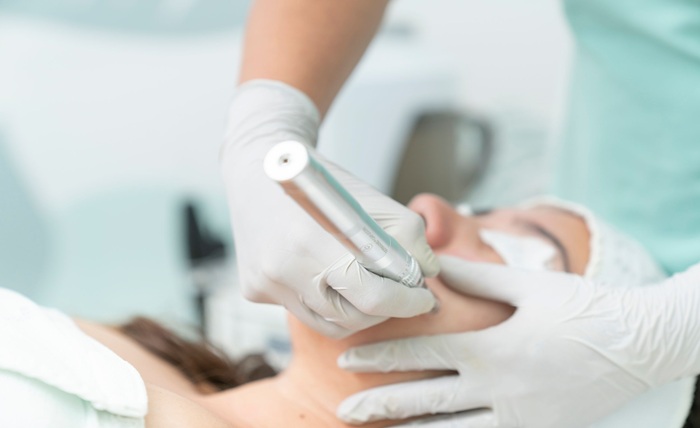
This is exactly what microneedling is designed to do. Also known as collagen induction therapy, it encourages the skin to repair itself and produce fresh collagen and elastin. If you have been comparing micro needling Westport options, this guide will help you understand how the treatment works, what results you can realistically expect, how to prepare and how to care for your skin afterward.
What Is Microneedling?
Microneedling is a minimally invasive procedure in which a skincare professional uses a device with very fine, sterile needles to create thousands of tiny, controlled channels in the skin. These micro-injuries are too small to cause damage, but they are enough to trigger the body’s natural wound-healing response.
As the skin repairs these channels, it increases the production of collagen and elastin, the proteins responsible for firmness, elasticity and a smooth surface. Over the following weeks, the skin gradually becomes thicker, tighter and more even. The tiny channels also allow serums applied during the treatment to penetrate much deeper than they would on intact skin.
What Can Microneedling Help With?
Because it works by stimulating the skin’s own repair processes, microneedling addresses a wide range of concerns:
- Fine lines and early wrinkles, especially around the eyes, mouth and forehead.
- Acne scars, particularly shallow rolling and boxcar scars.
- Enlarged pores, which can appear smaller as the surrounding skin firms up.
- Uneven texture and roughness that do not respond to regular exfoliation.
- Mild sun damage and dullness caused by years of outdoor activity.
- Loss of firmness as collagen production naturally slows with age.
- Stretch marks on the body, when treated with an appropriate protocol.
Professional Treatment vs. At-Home Rollers
At-home dermarollers are widely available, but they are not a substitute for a professional session. Home devices use much shorter needles, cannot be fully sterilized between uses and are easy to apply with too much pressure or the wrong technique. This can lead to irritation, infection or uneven results. In a professional setting, the needle depth is adjusted for each area of the face, the device is sterile and the treatment is performed by a trained provider who understands how the skin responds.
Who Is a Good Candidate?
Microneedling is suitable for most adults and most skin types and tones. It is a good choice for people who want gradual, natural-looking improvement rather than dramatic changes, and for those who are not ready for more aggressive procedures such as laser resurfacing.
The treatment may need to be postponed or avoided if you:
- have active acne, an infection or a cold sore in the treatment area,
- have taken isotretinoin within the period recommended by your doctor,
- are pregnant,
- tend to form keloid scars,
- have a skin condition such as eczema or psoriasis that is currently flaring,
- use medications that affect healing or bleeding.
A thorough consultation is the best way to confirm whether microneedling is right for you and which protocol will suit your skin.
What Happens During a Session?
A typical appointment lasts about an hour, including preparation. It usually follows these steps:
- Consultation and skin assessment. Your provider reviews your goals, medical history and current skincare routine.
- Cleansing and numbing. The skin is cleansed, and a topical numbing cream is applied for comfort.
- Treatment. The device is moved across the skin in small sections, with the needle depth adjusted for each area. Most clients feel light pressure or a vibrating sensation rather than pain.
- Serum application. A hydrating or regenerating serum, often based on hyaluronic acid, is applied to take advantage of the open micro-channels.
- Calming finish. The session ends with a soothing product that supports the skin’s barrier.
Some clinics also offer microneedling combined with platelet-rich plasma, which uses components of your own blood to further support the healing process. Your provider can explain whether this option makes sense for your goals.
Recovery and Aftercare
Right after treatment, the skin usually looks pink or red, similar to a mild sunburn, and may feel warm or tight. For most people, this fades within one to three days. Some light flaking can appear as the skin renews itself.
To support healing and protect your results:
- avoid makeup for at least 24 hours,
- use only gentle, fragrance-free products recommended by your provider,
- skip retinoids, exfoliating acids and vitamin C serums for several days,
- avoid sweating, swimming pools, saunas and intense workouts for a day or two,
- wear broad-spectrum sunscreen daily and limit direct sun exposure.
Sun protection deserves special attention in Westport. Whether you spend the weekend at the beach, sailing on the Sound or walking along the Saugatuck River, newly treated skin is more sensitive to UV rays. Many people schedule their sessions in fall and winter, when it is easier to stay out of strong sun.
When Will You See Results?
Many clients notice a fresher, more radiant look within a week, once the initial redness has faded. The most meaningful changes, however, develop gradually as new collagen forms over the following weeks and months.
For noticeable improvement in scars, lines or texture, most providers recommend a series of three to six sessions spaced about four to six weeks apart. After the initial series, occasional maintenance treatments help keep the results going. The exact plan depends on your skin type, concerns and how your skin responds.
Choosing a Provider
Because microneedling in Westport involves breaking the skin barrier, choosing the right provider is essential. Look for a clinic or spa that uses professional, sterile, single-use needle cartridges, follows strict hygiene standards and performs a detailed consultation before the first session. A good provider will set realistic expectations, explain the recovery process and adjust the treatment plan as your skin improves.
Final Thoughts
For anyone who wants smoother texture, softer lines and less visible scars without surgery or long downtime, collagen induction therapy is one of the most effective options available. Its results build steadily over time, so the skin looks healthier and firmer in a natural way. With a qualified provider, careful aftercare and a consistent treatment plan, you can give your skin the long-term support it needs