
Introduction
In the 21st century, humanity faces an urgent challenge — how to balance industrial growth, urban expansion, and environmental preservation.
As global temperatures rise, air and water pollution escalate, and resources dwindle, the world turns to environmental control technology for solutions.
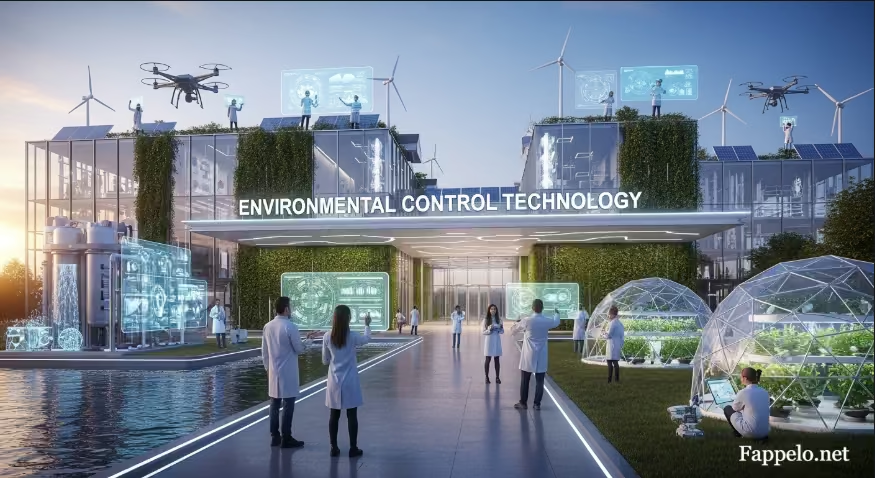
This technology represents the fusion of engineering, science, and digital innovation to monitor, manage, and mitigate environmental impacts.
From smart HVAC systems and air purification units to large-scale pollution control and renewable energy integration, environmental control technology is revolutionizing how societies interact with nature.
This article delves deeply into the evolution, applications, benefits, and future trends of environmental control technology, exploring how it is paving the way toward a cleaner, safer, and more sustainable world.
What Is Environmental Control Technology?
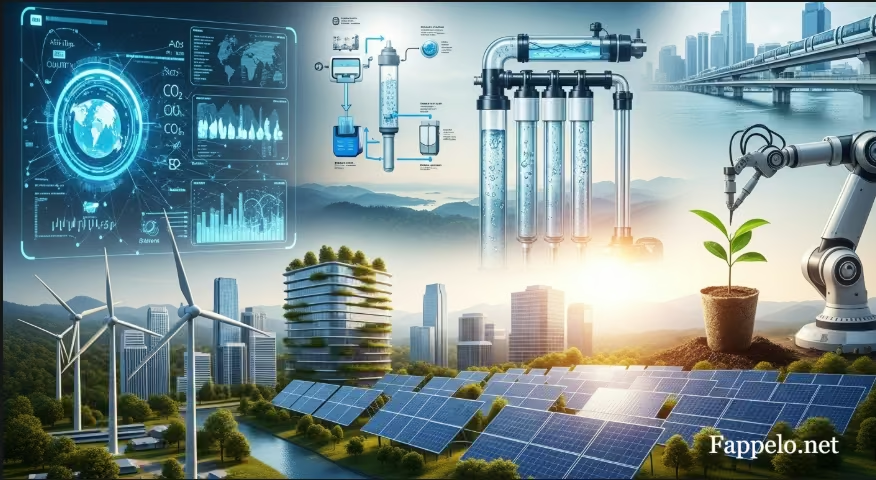
Environmental control technology (ECT) refers to a broad range of systems, tools, and processes designed to regulate and improve environmental conditions in both natural and built environments. It includes technologies for air and water quality management, waste reduction, renewable energy optimization, and sustainable design.
Core Objectives of Environmental Control Technology
- Minimize pollution in air, water, and soil
- Conserve natural resources through efficient use and recycling
- Reduce carbon footprints and promote sustainability
- Enhance indoor and outdoor environmental quality for human health
- Ensure regulatory compliance with environmental laws and standards
The Evolution of Environmental Control Technology
The roots of environmental control can be traced back to early industrial regulation efforts. However, it was the mid-20th century environmental movements that sparked innovation in pollution control and energy conservation technologies.
Historical Milestones
- 1960s–1970s: Rise of environmental awareness and the establishment of agencies such as the EPA (Environmental Protection Agency).
- 1980s–1990s: Advancements in air and water purification systems; introduction of clean energy technologies.
- 2000s–Present: Integration of digital monitoring, automation, and AI for real-time environmental management.
Today, environmental control technology has evolved into a multidisciplinary field, combining data analytics, IoT, and green engineering to address global ecological challenges.
Key Components of Environmental Control Technology
1. Air Quality Control Systems
Air pollution remains one of the leading environmental issues worldwide. Modern air quality control systems utilize filtration, chemical absorption, and electrostatic precipitation to capture pollutants before they enter the atmosphere.
Examples include:
- HVAC filtration units with HEPA filters
- Electrostatic precipitators in industrial plants
- Catalytic converters for vehicle emissions control
2. Water Treatment and Management
Environmental control technology in water management focuses on purification, desalination, and wastewater recycling.
Core systems:
- Membrane filtration technologies (reverse osmosis, nanofiltration)
- UV and ozone disinfection systems
- Smart irrigation for sustainable agriculture
3. Waste Management and Recycling
Technologies in this domain are designed to reduce, reuse, and recycle waste materials while minimizing landfill impact.
Examples include:
- Automated sorting systems using AI and robotics
- Bioconversion of organic waste into energy
- Closed-loop recycling processes in manufacturing
4. Energy Efficiency and Renewable Integration
Environmental control technology plays a crucial role in transitioning to clean energy.
Innovations include:
- Smart grids and energy management systems
- Solar photovoltaic optimization software
- Heat recovery and building automation systems
5. Climate and Environmental Monitoring
Modern control technologies use IoT sensors, drones, and satellite data to monitor air quality, soil conditions, and climate changes in real time.
These systems enable predictive environmental analytics, improving response to natural disasters and resource management.
Applications of Environmental Control Technology Across Industries
1. Industrial Manufacturing
Factories use environmental control systems to limit emissions, manage waste, and reduce energy consumption.
- Automated pollution scrubbers
- Smart ventilation systems
- Green supply chain tracking
2. Healthcare and Biotechnology
Hospitals and laboratories rely on controlled environments to ensure hygiene and safety.
- Airborne pathogen control systems
- Cleanroom ventilation and sterilization
- Temperature and humidity regulation
3. Agriculture and Food Production
Precision agriculture technologies optimize water use, soil nutrients, and pest control through environmental monitoring.
- Climate-controlled greenhouses
- IoT-based soil sensors
- Waste-to-compost technologies
4. Urban Planning and Smart Cities
Environmental control technology supports sustainable city design, ensuring cleaner air, efficient energy use, and better waste management.
- Smart lighting and HVAC systems
- Air quality monitoring networks
- Green building certifications (LEED, BREEAM)
5. Aerospace and Space Exploration
In aerospace, maintaining environmental stability is critical. Environmental control and life support systems (ECLSS) regulate oxygen levels, humidity, and temperature aboard spacecraft.
Benefits of Environmental Control Technology
| Benefit | Description |
| Improved Health and Safety | Reduces exposure to pollutants and hazardous materials. |
| Energy Efficiency | Optimizes resource consumption and reduces costs. |
| Sustainability | Promotes renewable resources and circular economy models. |
| Regulatory Compliance | Ensures adherence to environmental laws and standards. |
| Operational Efficiency | Enhances industrial and municipal performance through automation. |
Challenges in Implementing Environmental Control Technology
Despite its potential, ECT faces several obstacles:
- High initial investment in advanced systems
- Complex maintenance requirements
- Data security and management challenges in IoT systems
- Resistance to technological change in traditional sectors
Addressing these challenges requires policy incentives, technological training, and collaborative innovation between public and private sectors.
The Future of Environmental Control Technology
The next generation of ECT will be powered by AI, big data, and machine learning. Predictive analytics will enable early detection of environmental issues, while blockchain could bring transparency to carbon trading and sustainability reporting.
Emerging Trends
- Smart environmental control systems integrating real-time data
- Carbon capture and storage (CCS) innovations
- Green building automation and digital twins
- Bioengineering for waste-to-energy conversion
- Circular economy systems reducing resource dependency
These advancements will make environmental management proactive rather than reactive, ensuring that technology becomes a true ally of the planet.
Actionable Insights for Businesses and Policymakers
- Adopt smart environmental monitoring tools to meet sustainability goals.
- Invest in green technologies that balance efficiency and compliance.
- Collaborate with environmental experts for audits and strategic planning.
- Incorporate ECT into ESG frameworks to attract environmentally conscious investors.
Conclusion
Environmental control technology is no longer an optional investment — it is a necessity for survival and sustainability. By integrating engineering innovation, data intelligence, and environmental responsibility, societies can achieve harmony between technological progress and ecological preservation.
As the world continues to face pressing environmental challenges, embracing environmental control technology is the definitive step toward building a cleaner, healthier, and more resilient planet for future generations.