
When choosing steel for a project, a key decision is whether to use hot-rolled or cold-rolled steel. Although both come from the same material, the different manufacturing processes change their properties, making them suitable for different uses. Understanding these distinctions is vital for the structural integrity, appearance, and cost of the final product.
What Is Hot-Rolled Steel?
Hot-rolled steel is steel that has been roll-pressed at extremely high temperatures—over 1,700°F (926°C), which is above the recrystallization temperature for most steels. This high heat makes the steel easier to form and shape, allowing manufacturers to produce it in larger sizes and more complex shapes with relative ease.
The Hot-Rolling Process
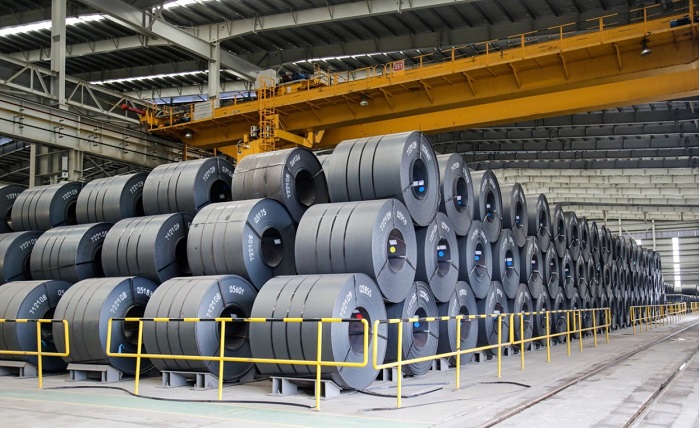
The process begins with a large, rectangular piece of steel called a billet. The billet is heated in a furnace to the required temperature and then sent through a series of rollers. These rollers compress the steel, stretching it out and reducing its thickness to form a coil. As the steel cools, it shrinks slightly, which can lead to less precise final dimensions compared to cold-rolled steel. The surface also develops a scaly, rough finish from the high-temperature processing.
Key Characteristics
- Scaly Surface: The rapid cooling and high-temperature processing leave a rough, non-oily surface. This scale can protect against some corrosion, but it needs to be removed before painting or finishing.
- Less Precise Dimensions: Due to shrinkage during cooling, the final dimensions of hot-rolled steel are less uniform.
- Slightly Rounded Edges: The rolling and cooling process typically results in slightly rounded edges and corners.
- Lower Strength: The recrystallization that occurs during hot-rolling prevents significant work hardening, resulting in a material with lower strength and hardness than cold-rolled steel.
Common Applications
The properties of hot-rolled steel make it ideal for applications where precise dimensions and a smooth surface finish are not primary concerns. It’s often used in:
- Structural components like I-beams and railroad tracks.
- Automotive frames and parts.
- Agricultural equipment.
- Construction materials where strength is more important than finish.
Advantages and Disadvantages
Advantages:
- Lower Cost: The manufacturing process for hot-rolled steel is simpler and requires less processing, making it more affordable.
- Easier to Work With: The material is more malleable and easier to form into various shapes.
- Good for Welding: Its properties make it well-suited for welding applications.
Disadvantages:
- Imprecise Dimensions: Shrinkage during cooling leads to less control over the final shape and size.
- Rough Surface Finish: The scaly surface is not ideal for applications requiring a smooth, aesthetic finish and may require additional processing.
What Is Cold-Rolled Steel?
Cold-rolled steel is essentially hot-rolled steel that has undergone further processing. After the hot-rolled steel has cooled, it is rolled again at room temperature. This “cold rolling” increases the steel’s strength and hardness through a process called strain hardening.
The Cold-Rolling Process
The process starts with cooled, hot-rolled steel coils. These coils are then passed through another series of rollers at room temperature. This additional compression refines the grain structure, increasing its strength and hardness. This process allows for much tighter dimensional tolerances and a smoother, more refined surface finish.
Key Characteristics
- Smooth, Oily Surface: Cold-rolling creates a smooth, often oily surface that is free of scale.
- Precise Dimensions: The steel is processed at room temperature, so there is no shrinkage, resulting in highly accurate and consistent dimensions.
- Sharp Edges: The process yields well-defined, sharp corners and edges.
- Higher Strength: Strain hardening during the cold-rolling process makes the steel significantly stronger and harder than hot-rolled steel.
Common Applications
The superior finish and strength of cold-rolled steel make it a popular choice for applications where aesthetics, precision, and durability are important. Common uses include:
- Appliances like refrigerators and washing machines.
- Metal furniture and shelving.
- Automotive parts that require a good surface finish, like body panels.
- Certain components in HVAC systems, like the HVAC steel coil.
Advantages and Disadvantages
Advantages:
- Higher Strength and Hardness: It is up to 20% stronger than hot-rolled steel.
- Superior Surface Finish: The smooth surface is ready for painting and finishing without extra processing.
- Tighter Tolerances: It can be manufactured to precise dimensions, making it ideal for parts that need to fit together perfectly.
Disadvantages:
- Higher Cost: The additional processing steps make cold-rolled steel more expensive.
- More Difficult to Work With: Its increased hardness can make it more challenging to bend or shape.
- Internal Stresses: The cold-working process can create internal stresses that may cause the material to warp if not properly relieved through heat treatment.
Key Differences: Hot-Rolled vs. Cold-Rolled Steel
Choosing between the two types of steel comes down to understanding their fundamental differences and how they align with your project’s requirements.
Manufacturing
The primary difference lies in the temperature at which the steel is processed. Hot-rolled steel is formed above its recrystallization temperature, while cold-rolled steel is processed at room temperature after the initial hot-rolling stage. This fundamental distinction is the source of all other differing properties.
Strength and Durability
Cold-rolled steel is significantly stronger and harder than hot-rolled steel. The strain hardening that occurs during the cold-rolling process strengthens the material, making it more resistant to deformation and wear. Hot-rolled steel, while not as strong, is more ductile and easier to form.
Surface Finish
There is a stark contrast in the surface finish of the two materials. Hot-rolled steel has a rough, scaly surface, whereas cold-rolled steel boasts a smooth, refined finish that is visually appealing and ready for further treatments like painting or coating.
Cost
Due to the additional processing required, cold-rolled steel is more expensive than hot-rolled steel. If your project does not require the tight tolerances or superior finish of cold-rolled steel, using hot-rolled steel can be a more cost-effective solution.
Conclusion
Now that you understand the differences between hot-rolled and cold-rolled steel, you can make an informed decision on which material to use for your project. Both have their own unique advantages and are suitable for a variety of applications.